
Selecting the right heavy-duty crane for an industrial operation is rarely a straightforward decision. Beyond lifting capacity, procurement teams must weigh duty class, span, lift height, control precision, environmental rating, and long-term serviceability—all while staying within budget and project timelines. In the large tonnage crane segment, understanding how heavy-duty crane technical parameters translate into real-world performance is the first step toward making a sound investment.
What Defines a Heavy-Duty Crane?
A heavy-duty crane is built for lifting loads that exceed the capabilities of standard industrial cranes—typically starting at 50 tons and extending well beyond 500 tons for specialized applications. These cranes are engineered for high-duty cycles, meaning they are designed to operate for extended periods under load without compromising safety or structural integrity.
Unlike light-duty cranes that may run at lower speeds with simpler control systems, a high-capacity crane integrates advanced features: variable frequency drives for smooth acceleration, anti-sway systems for load stability, multi-speed hoists for precise positioning, and often automated or semi-automated control interfaces.
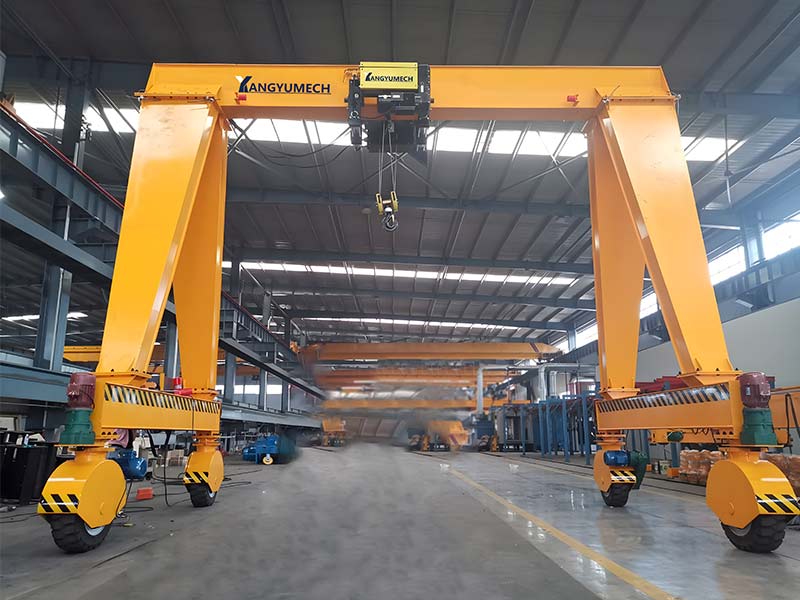
Key Technical Parameters Compared
When evaluating heavy lift crane options, several technical parameters deserve close attention:
Lifting capacity and configuration. The rated capacity is only the starting point. Buyers should also consider the crane’s ability to handle off-center loads, the number of lift points (single vs. multiple hoists), and whether the crane supports auxiliary hoists for lighter, high-speed auxiliary lifts alongside the main lift.
Span and lift height. For overhead cranes, the span determines the coverage area across the bay. For gantry cranes, the span defines the effective working width. Lift height requirements must account not just for the load height, but also for the clearance needed above the load for safe maneuvering. In heavy manufacturing facilities, a seemingly small difference in lift height can determine whether a crane can clear assembled equipment or previously placed loads.
Duty class and design standard. Cranes designed to FEM duty class or CMAA standards carry explicit duty classifications. A crane rated for intermittent use will fail prematurely if deployed in a continuous-production environment. Matching the FEM duty class to the actual operational profile is one of the most common—and costly—oversights in crane procurement.
Control systems and positioning accuracy. Modern heavy-duty crane systems increasingly incorporate closed-loop control, load cell feedback, and automated positioning. For applications such as mould handling, turbine installation, or precision assembly, positional accuracy measured in millimetres can be as critical as raw lifting power.
Environmental rating and protection. In harsh environments—steel mills, shipyards, foundries, or outdoor storage yards—the crane’s protection rating (IP55 or higher for motors, specialist coatings for structural steel, sealed gearboxes) directly affects service life and maintenance frequency.
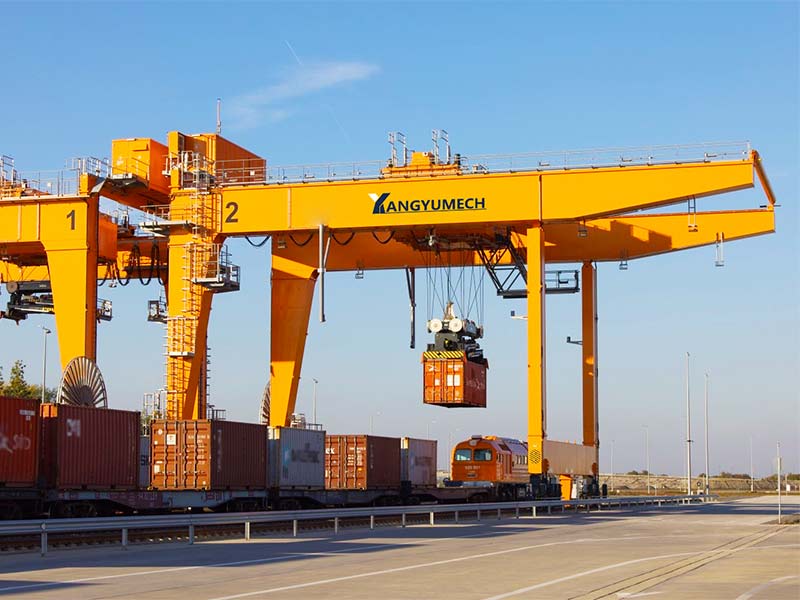
Heavy-Duty Crane Types and Applications
Heavy-duty crane applications span the full range of heavy lifting market segments:
Heavy-duty overhead cranes remain the workhorse of steel mills, heavy machinery factories, and fabrication shops. With capacities ranging from 50 tons to over 500 tons, these cranes operate on runway beams and deliver precise, repeatable lifts in covered facilities.
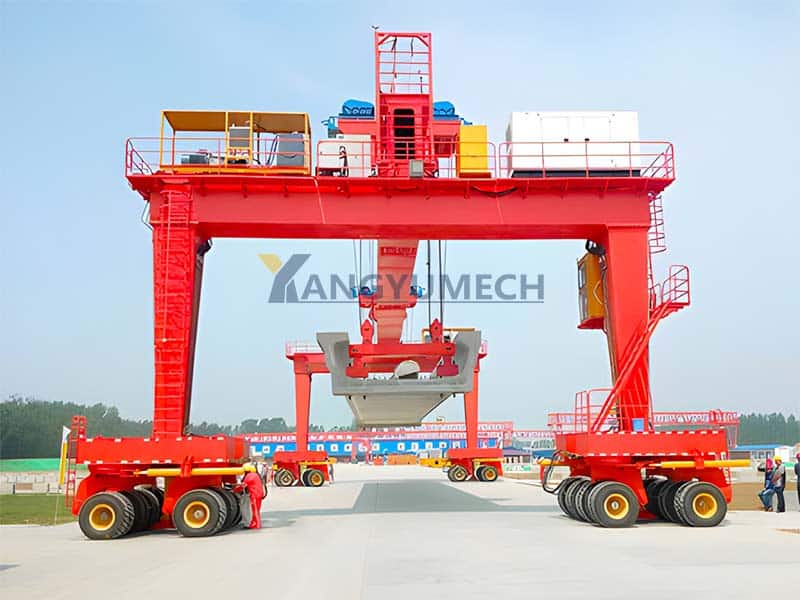
Gantry cranes (including full-gantry and semi-gantry configurations) extend heavy lifting to outdoor applications. Shipbuilding gantry cranes, container yard gantry cranes, and heavy-duty gantry systems for precast concrete or steel storage yards all fall into this category.
Jib cranes and slewing jib cranes handle localized heavy lifting—often as auxiliary cranes supplementing a main overhead or gantry system. In assembly lines where large components must be positioned precisely, a heavy-duty jib crane offers both reach and load stability.
Specialized heavy lift cranes, including grab bucket cranes for bulk material handling and magnet cranes for steel scrap yards, are engineered for specific material flows. Their technical parameters—such as duty cycle, motor power, and control logic—are optimized for continuous-operation scenarios.
Market Performance and Demand Trends
The global market for heavy-duty cranes has seen sustained demand driven by infrastructure investment, energy transition projects, and expanding heavy manufacturing capacity. Tracking heavy-duty crane market performance requires understanding both demand drivers and the competitive landscape shaping buyer choices. Several trends are worth noting:
– Increasing lift capacities. As industrial facilities scale up, the ceiling for required lift capacity keeps rising. Cranes with 300–500 ton capacity are no longer niche products. They are increasingly standard in major shipyards, steel plants, and energy equipment manufacturing facilities.
– Shift toward higher duty classes. End users are prioritizing cranes designed for continuous or near-continuous operation, recognizing that lower-duty cranes incur higher lifecycle costs through more frequent repairs and earlier replacement.
– Integration of automation and safety systems. Features that were once optional—such as load monitoring, anti-collision systems, and remote operation capability—are becoming baseline expectations in new heavy crane procurement.
– Price competitiveness from Asian manufacturers. Manufacturers in China and Southeast Asia have become a significant force in the global market, offering heavy-duty crane price points substantially below comparable European or American equipment—particularly for standard and semi-custom configurations.
Choosing the Right Heavy-Duty Crane Supplier
For procurement teams, the supplier evaluation is as important as the technical specification. A heavy-duty crane is a long-term asset. The supplier’s ability to provide spare parts, on-site service, engineering support, and timely communication directly affects the total cost of ownership.
Yangyumech has established itself as a dedicated heavy-duty crane manufacturer and heavy-duty crane supplier, serving clients in steel, shipbuilding, energy, and heavy manufacturing sectors. The company’s product range covers heavy-duty overhead cranes, various heavy-duty gantry crane configurations, jib cranes, and specialized lifting systems—with lifting capacities from 50 tons to 500 tons and customization available for duty class, span, lift height, and control systems.
Every Yangyumech heavy-duty crane is load-tested before dispatch and manufactured under documented quality control procedures aligned with FEM, ISO, and CE marking requirements. The engineering team works directly with buyer specifications, allowing procurement departments to specify crane technical specifications matched to their operational needs.
For international buyers, Yangyumech offers a competitive heavy-duty crane price point without compromising on core components—motors, gearboxes, and electrical systems are sourced from established suppliers.
Whether you are upgrading an existing facility or equipping a new production line, an experienced heavy-duty crane supplier can provide a tailored proposal based on your lift capacity needs, facility layout, and project timeline. Yangyumech’s sales engineers respond promptly to technical enquiries from procurement teams worldwide.