

KBK Rigid Crane
Rigid KBK‑C modular crane (rigid KBK crane) is European‑originated rigid‑bolt‑connected modular workstation lifting system. Different from flexible hinged KBK light crane, it adopts full rigid bolted connections between track profiles without universal hinged joints.
Yangyumech rigid KBK‑C crane covers capacity from 0.125‑5 ton, max span up to 10 m. Supports ceiling‑suspended mounting or free‑standing self‑support frame. Higher rigidity and better positioning accuracy, widely applied for automotive assembly, machining workshops and old‑factory renovation projects.
Description
Typical Application & Site Pre‑Conditions
Rigid KBK‑C modular crane fits scenarios requiring high‑rigidity and accurate positioning:
‑ Automotive and auto‑parts assembly production lines
‑ Precision machining workshops, mold‑changing stations
‑ Old‑factory renovation projects without heavy overhead runway cranes
‑ Small‑batch equipment assembly, mechanical component handling
Site pre‑condition:
1. Suspended‑type: Building overhead steel beam must be structurally verified to bear suspension dynamic load.
2. Self‑standing‑type: Requires flat hardened concrete floor for support frame anchor bolts.
Working duty: A1‑A3; Mainly indoor workstation intermittent‑medium frequency lifting.
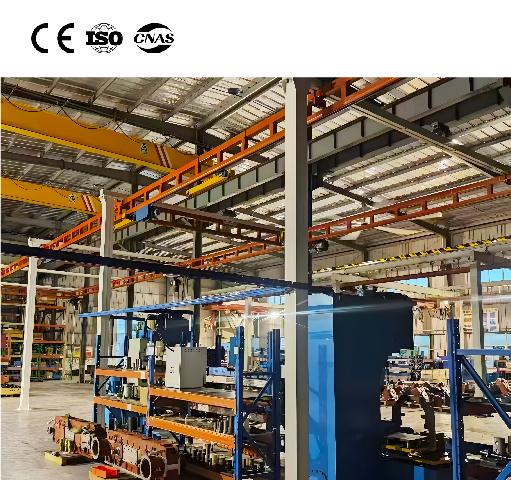
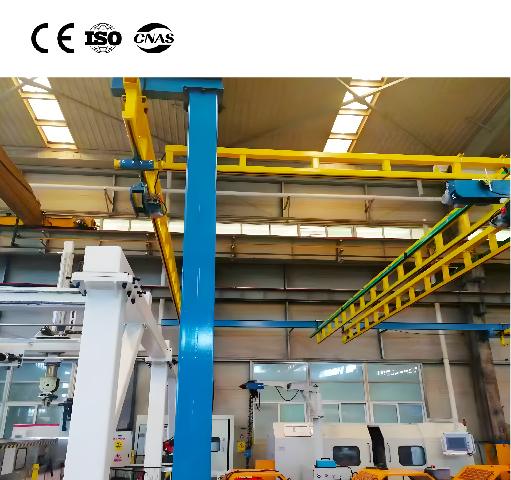
Two Main Installation Configurations
Ceiling‑Suspended Rigid KBK‑C Crane
Suspended to existing building steel roof beams by heavy‑duty suspension brackets. Does not occupy floor space, suitable for workshops with qualified overhead steel bearing‑structure. Suspension point spacing normally 3‑5 meters.
Free‑Standing Self‑Support Rigid KBK‑C Crane
Complete independent steel support frame system. No requirement for building overhead load‑bearing capacity. Perfect for old factory renovation or buildings without qualified roof steel beams.
Custom Purchasing Process
1. Submit inquiry: Provide rated lifting capacity, effective span, runway length, installation mode(ceiling‑suspended / free‑standing self‑support), hoist requirement, manual or electric trolley travel, special demands like explosion‑proof. Also send building‑structure condition.
2. Custom technical drawing & quotation: Our engineering team delivers tailored layout drawing and formal quotation within 24 working hours.
3. Order confirmation: Confirm technical drawings, specifications, delivery cycle and commercial terms.
4. Production & strict‑quality‑inspection: Profile manufacturing, component inspection, factory function test before shipment.
5. Seaworthy export‑packaging & ocean shipment, deliver full‑set of export‑oriented certification documents.
6. After‑sales support: Installation guidance manual, remote‑technical‑service and long‑term spare‑parts supply.
Features
1. High-strength track design: The tracks are made of high-strength steel such as Q235 and Q345, formed through cold rolling or welding processes, with cross-sections in the shape of channels or I-beams. Compared to ordinary structural steel, their bending strength is increased by over 30%. Within a span of 2–10 meters, the deflection under rated load is ≤L/200, ensuring smooth operation. For example, 5-ton-class tracks have a thickness of 8-12 mm, capable of withstanding long-term, high-frequency load impacts.
2. Modular assembly system: Core components such as tracks, trolleys, and connectors are standardized steel modules that can be quickly connected using bolts and clips, eliminating the need for on-site welding. A single system weighing less than 5 tons can be installed in just 1-2 days, and the track length can be flexibly extended or the layout changed (e.g., from straight to circular) as needed. The assembly accuracy is ±2 mm, ensuring smooth trolley operation.
3. Sturdy suspension structure: The suspension device uses forged steel or high-strength bolts and can be directly fixed to concrete beams, steel structure roofs, or independent brackets, with a single-point suspension load capacity of 1-3 tons. The suspension spacing can be adjusted according to the track span (usually 3-5 meters per point) to ensure that the track does not sag significantly and is suitable for different factory structures.
4. Light-load high-efficiency operation: Lifting capacity ranges from 0.125 to 5 tons (standard models), with custom models capable of handling larger tonnages. Lifting speed: 3–16 m/min (electric hoist drive), travel speed of the running trolley: 10–30 m/min, positioning accuracy: ±5 mm. Ideal for the “point-to-point” transportation of delicate materials such as electronic components and precision parts, avoiding the power waste associated with traditional cranes.
5. Low-consumption, durable design: Steel components are zinc-plated or painted to prevent rusting for at least 10 years and can withstand workshop dust, light oil stains, and other environmental conditions. The motor uses an S3-40% duty cycle, suitable for low to medium frequency operations (average daily use ≤ 8 hours), with a temperature rise of ≤ 70K during continuous operation to ensure long-term stable operation.
6. Work level compatibility: Mostly A1-A3 level, specially designed for intermittent handling, such as loading and unloading on production lines and short-distance transportation in warehouses. Its structure has reasonable redundancy and can achieve more than 100,000 lifting cycles under rated load, with a failure rate of less than 0.5 times per thousand hours.
7. Highly compatible with any site: No need for pre-embedded tracks or fixed foundations. Tracks can be hung along walls or roofs, or installed on the ground. The minimum working space width required is only the track span + 1.5m, making it suitable for narrow workshops and old factory renovations. For example, a 2m span KBK steel crane can be installed next to a 3m wide assembly line to achieve lateral material transfer.
8. Flexible system integration: Can be linked with conveyor belts, robotic arms, AGVs, and other equipment to build an automated material flow system. For example, in an automotive parts workshop, circular KBK tracks can be used in conjunction with robotic grippers to achieve unmanned transfer of workpieces between multiple workstations, thereby improving production speed.
9. Controllable renovation costs: When expanding or adjusting the track layout in the future, only the number of modules needs to be increased or decreased, and the renovation costs are 30%-50% of those of traditional cranes. For example, when expanding a straight track to a U-shaped layout, the cost of the new track and connecting parts is approximately 20% of the original system, and does not affect the strength of the original structure.
10. Multiple safety protections: Standard overload limiter (accuracy ±5%), lifting height limit switch (mechanical + electronic dual protection), trolley travel limit switch, some models equipped with emergency stop button and leakage protection, compliant with EN 13000 and GB/T 3811 standards, preventing safety accidents caused by overload or overtravel.
11. Convenient and economical maintenance: Steel components are highly versatile, and wear parts (such as small wheels and motor carbon brushes) can be quickly replaced without customization. Daily maintenance only requires monthly checks of track connection tightness and quarterly lubricant replenishment. Annual maintenance costs are less than 20% of those of traditional cranes, making them suitable for low-cost management by small and medium-sized enterprises.
Technical Data
| Capacity | 1t | 2t | 3.5t | 5t |
|---|---|---|---|---|
| Span | 2-6m | 2-7m | 3-8m | 3-10m |
| Lifting height | 2-6m | 2-7m | 3-8m | 3-10m |
| Work Duty | A2-A3 | A3 | ||
| Lifting speed | 8-16m | 6-12m | 5-10m | 4-8m |
| Hoist Traveling Speed | 15-30m | 15-25m | 10-20m | |
| Rail | Grooved steel track | |||
Purchasing Process

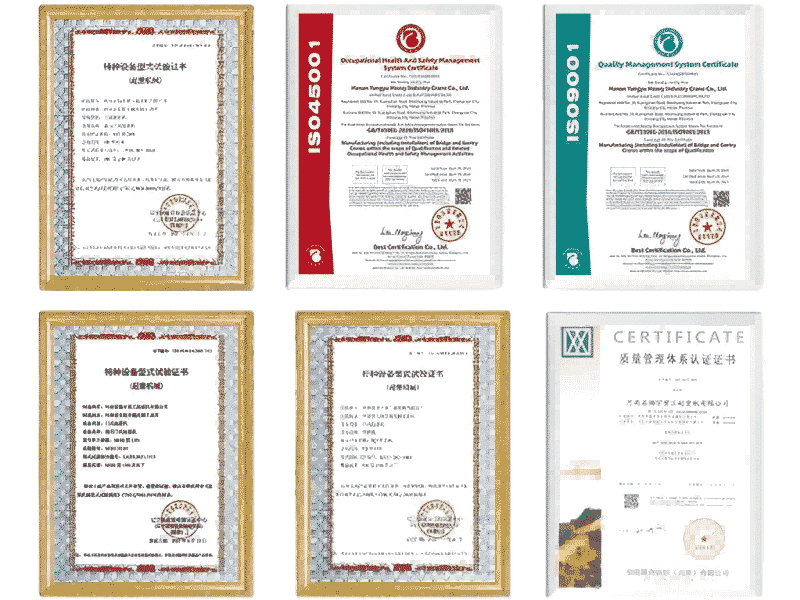
Our Crane Certifications
Our cranes (overhead crane, gantry crane, jib crane and electric hoist) are fully certified to meet international and local manufacturing standards. We hold complete qualification documents to guarantee product safety and reliable quality for global buyers. Below are our key certifications:
- ISO 9001 Quality Management System Certificate
- ISO 45001 Occupational Health & Safety Management Certificate
- Special Equipment Type Test Certificate for Lifting Machinery
- Manufacturing License for Lifting Equipment
- Third‑party Independent Audit Certificates
- Complete Export‑Oriented Qualification Documents
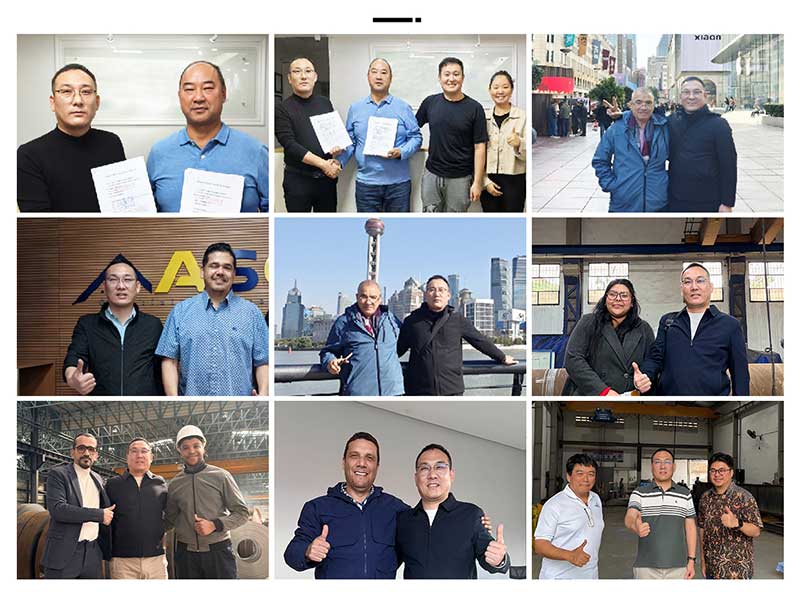
Our Custom Visit
We welcome worldwide customers to visit our manufacturing workshop. You can check crane production processes, raw materials and finished products face‑to‑face with our engineering team.
- Customized Crane Solution Design
- Professional Technical Consultation & Quotation Support
- Production Tracking & Quality Supervision
- Overseas Shipping & Complete Document Service
- After‑sales Technical Support & Guidance
FAQs for Rigid KBK‑C Modular Crane
Please provide lifting capacity, effective span, runway length, installation mode(ceiling‑suspended or free‑standing), hoist requirement, trolley travel mode and workshop building‑structure information.
Rigid KBK‑C uses full rigid bolt‑fixed joints for higher rigidity, larger allowable span and better positioning accuracy. Flexible KBK adopts hinged flexible joints, more suitable for small‑span light‑load scenarios. Please check comparison table above.
Yes. Choose free‑standing self‑support rigid KBK‑C version, which relies on independent steel frame and concrete floor anchor bolts, no overhead building load required.
Standard max span up to 10 m, customized span available upon engineering evaluation.
Yes, we can configure full explosion‑proof electrical and mechanical components for hazardous‑zone working‑conditions.
Hot Products
Single Girder Gantry Crane
- Capacity: 0.3t-36t; Span length: 4-35m
- Lifting height: 6m, 9m, 12m, etc.
- Raged voltage: 220V~690V
- Lifting height: 6m, 9m, 12m, etc.
- Raged voltage: 220V~690V
LD Single Beam Bridge Crane
- Single welding box girder
- Lifting Height: 5-50m
- Capacity: 1t-40t
- Lifting Height: 5-50m
- Capacity: 1t-40t
European Standard Electric Hoist
- Capacity: 1t-12.5t
- Working Class(FEM): 1Am-4m
- Lifting Height (m): 6/9 12/18
- Working Class(FEM): 1Am-4m
- Lifting Height (m): 6/9 12/18
Get In Touch
Yangyumech is a leading professional manufacturer of cranes in China. Our company integrates the processes of crane research and development, manufacturing, sales and service.