
The global manufacturing sector is undergoing a significant shift — and one of the beneficiaries is a piece of equipment that has been in use for well over a century. Hand chain hoists, the simple mechanical lifting tools once considered a relic in the age of electric automation, are experiencing a surge in demand driven by a very specific set of market forces — an industrial hand chain hoist that remains essential across the modern factory floor.
Demand for hand chain hoists in manufacturing has grown by approximately 34 percent over the past three years. For the manufacturing hoist buyer, this trend reflects a practical reality: not every lifting task justifies the cost, complexity, or electrical infrastructure of a powered system.
Why Manual Chain Hoists Are Making a Comeback in Manufacturing
Several converging trends are responsible for the 34 percent demand growth in manual chain hoists.
The first is the rise of distributed production models. As manufacturers shift toward smaller, geographically distributed workshops, the need for portable, self-contained lifting equipment has grown. A hand chain hoist requires no power connection, no control panel, and no specialized installation.
The second driver is the continued importance of maintenance operations within manufacturing facilities. Even the most automated plants require regular maintenance — tasks that frequently occur in areas where electrical equipment must be isolated or where temporary lifting is needed without disrupting active production. A heavy duty hand chain hoist rated for 1.5 to 10 tons provides the necessary lifting force without electrical hazards or requiring a system shutdown.
The third factor is cost pressure on small and medium-sized manufacturers. Factory managers who once planned to install electric hoists are reconsidering when they look at the full cost of electrical installation, motor controllers, and ongoing power consumption — making a quality manual chain hoist for manufacturing a more practical investment.
Understanding Crane Hoist Types: Which One Fits the Manufacturing Floor
Before selecting a hoist for a manufacturing application, it helps to understand the landscape of crane hoist types available and the scenarios each is designed for.
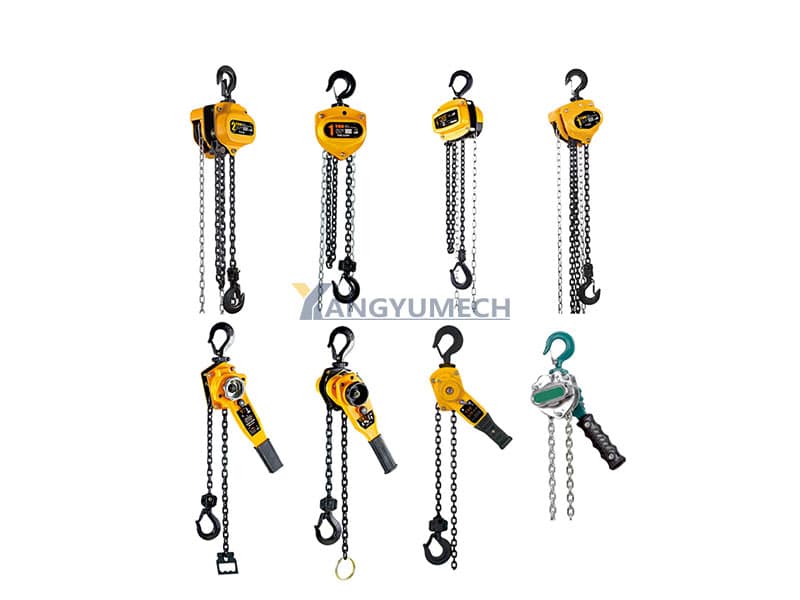
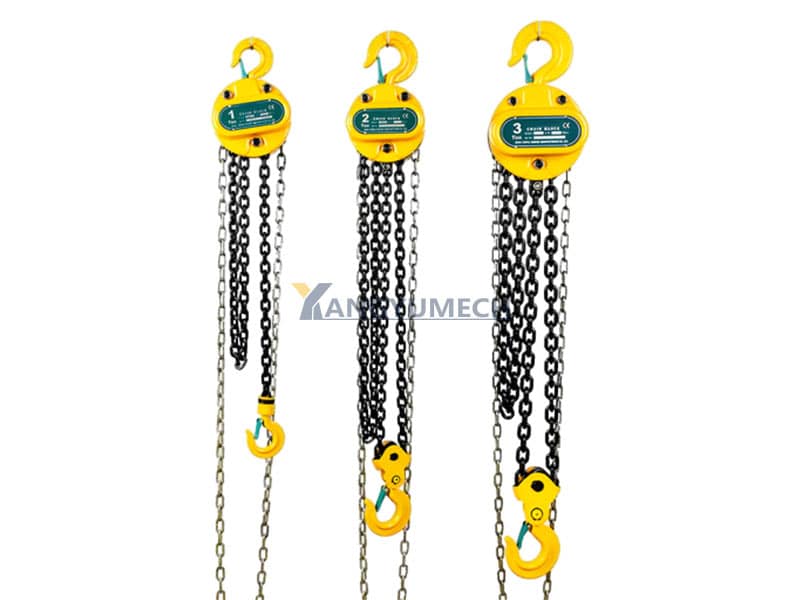
Hand chain hoists are the most mechanically straightforward option. The operator pulls a hand chain that drives a load chain through a reduction gear train. The gear ratio allows a single worker to lift loads of hundreds or thousands of kilograms with controlled, steady motion. In manufacturing applications, hand chain hoist capacity typically ranges from 0.5 to 10 tons, with lift heights from 3 to 12 meters.
Lever chain hoists use a short ratcheting lever arm instead of a hand chain. These are preferred in horizontal pulling applications and confined spaces where a hand chain cannot be pulled through its full range.
Electric chain hoists represent the powered alternative. They offer higher lifting speeds and require less physical effort from the operator, making them suitable for high-cycle production environments. However, their dependency on electrical power, combined with higher initial cost, means they complement rather than replace manual options in most manufacturing settings.
Wire rope hoists are typically found in heavier applications such as steel mills, shipyards, and large-scale fabrication shops. Their complexity and maintenance requirements make them less suitable for general manufacturing workshops.
The key decision factors for hoist applications in manufacturing typically include load capacity, lift height, available headroom, frequency of use, and whether horizontal pulling is required alongside vertical lifting. For machine shops, fabrication bays, and maintenance departments, a hand chain hoist for industrial manufacturing use offers the best combination of practicality and value.
Applications of Hand Chain Hoists Across Manufacturing Operations
Hand chain hoist applications are more varied than many outside observers might expect.
In machine shops, hand chain hoists are used to lift heavy workpieces onto CNC machining centers, position equipment for setup, and remove completed parts from fixtures.
In fabrication and welding bays, a hand chain hoist for crane mounting provides the versatility to move fabricated assemblies between workstations without committing to a fixed overhead crane installation — a significant advantage in job shops where layout changes frequently.
Maintenance departments rely heavily on lever chain hoists and hand chain hoists — a manual hoist for factory use delivers the right combination of control, capacity, and independence from facility infrastructure.
Hand Chain Hoist Price: What Manufacturers Should Know
Understanding hand chain hoist price ranges helps when budgeting for a new lifting tool or comparing quotes from different suppliers.
For a standard heavy duty hand chain hoist rated at 3 tons with a 6-meter lift height, prices from quality manufacturers typically fall between USD 150 and 400 per unit, depending on features and certifications. A 5-ton unit in the same configuration typically runs USD 250 to 550, with higher-capacity units commanding proportionally more.
The purchase price represents only part of the total cost picture. Hand chain hoists have significantly lower ongoing operating costs than electric alternatives — no electricity consumption, simpler maintenance, and no control system to repair. When factored into a three-year total cost of ownership analysis, manual options often emerge as the more economical choice for intermittent lifting applications.
Yangyumech: Your Trusted Manual Hoist Manufacturer
Yangyumech is a trusted manual hoist supplier serving manufacturers across Southeast Asia, the Middle East, Africa, and Latin America. Every Yangyumech manual chain hoist is manufactured under documented quality control and individually load tested before dispatch. The Yangyumech hand chain hoist range covers capacities from 0.5 to 20 tons with lift heights to 12 meters, suitable for general workshop and heavier industrial applications. Models with enhanced corrosion protection are available for wet, chemical, or outdoor environments.
What sets Yangyumech apart is competitive pricing, responsive communication, and proven experience handling export orders to more than 30 countries. The company works directly with procurement teams to configure orders to specific requirements — including capacity, lift height, chain length, and certifications.
If your manufacturing operation needs a reliable hand chain hoist at a competitive price, contact the Yangyumech team directly. As a manual chain hoist supplier China-based, Yangyumech offers competitive pricing on manual chain hoist for workshop use and general factory applications to buyers worldwide.