
Southeast Asia is in the middle of one of the most significant port infrastructure buildouts in its history. Driven by supply chain diversification away from single-country dependency, rising intraregional trade volumes, and sustained foreign direct investment into manufacturing hubs across Vietnam, Indonesia, Malaysia, Thailand, and the Philippines, the region’s container throughput has grown at a pace that existing terminal infrastructure was never designed to handle.
Port authorities and private terminal operators have responded consistently: expand capacity quickly. Central to this is a sharp increase in demand for rubber-tired gantry cranes and rail-mounted gantry cranes.
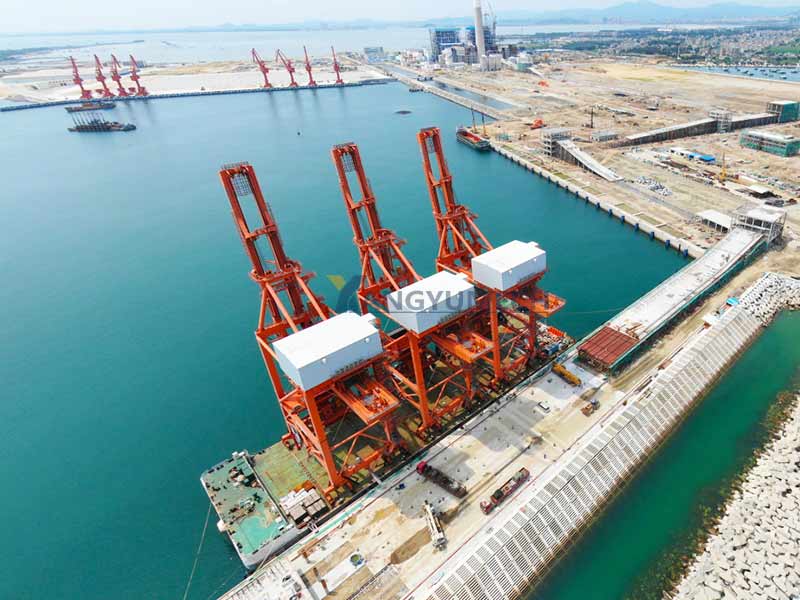
The Numbers Behind the Demand
Vietnam’s port sector alone has seen container throughput grow by double digits annually over the past several years, with Cai Mep-Thi Vai emerging as a deep-water hub capable of handling the largest container vessels currently in service.
Indonesia’s Tanjung Priok and Patimban ports are undergoing phased capacity expansions that will require substantial crane fleet additions over the next decade. Malaysia’s Port Klang and Penang Port are both investing in yard automation upgrades that favor RMG crane configurations.
The Philippines, historically underinvested in port infrastructure relative to its trade volumes, has committed to a series of public-private partnership terminal projects that include crane procurement as a core component.
What is driving the crane demand specifically is not just the volume growth but the shift in how terminals are being designed. Older Southeast Asian ports were built around manual or semi-mechanized operations with relatively low crane density. New terminal designs and many retrofit projects at existing facilities are adopting higher stacking configurations and tighter yard layouts that require gantry cranes capable of handling five or six container tiers.
RTG cranes, with their ability to reposition between yard blocks without fixed infrastructure, are favored for greenfield terminals. RMG cranes, which run on rails and support higher automation, are specified for terminals aiming for long-term throughput density and labor cost control.
RTG vs RMG: Why Both Are Growing
The RTG crane has been the workhorse of container terminals across Southeast Asia for the past two decades. Its appeal is straightforward: it does not require the civil engineering investment of a fixed rail system, it can be redeployed between yard blocks as traffic patterns shift, and it is available from multiple manufacturers at competitive price points.
For terminal operators managing uncertain volume growth projections, the RTG’s operational flexibility is a genuine advantage. The current generation of electric RTG cranes, which replace diesel generators with grid-connected power systems, is also addressing the emission compliance requirements that are becoming standard in new terminal concession agreements across the region.
RMG cranes are gaining ground for different reasons. As terminal operators in Vietnam, Malaysia, and Singapore look to reduce labor dependency and improve yard productivity, the RMG’s compatibility with automated stacking systems becomes a compelling argument.
An automated RMG crane can operate around the clock with minimal human intervention, stack containers to greater heights than most RTG configurations, and integrate directly with terminal operating systems for real-time inventory management.
The capital cost is higher and the civil works more extensive, but for high-throughput terminals with stable long-term volume commitments, the productivity gains justify the investment.
The result is a market in which both crane types are experiencing strong order pipelines, driven by different segments of the terminal operator community.
Supply Chain Shifts Are Sustaining the Trend
The structural driver behind Southeast Asia’s port expansion is not a short-term trade cycle. The relocation of manufacturing capacity from China to Vietnam, Indonesia, Thailand, and Malaysia has been underway for several years and shows no sign of reversing.
Electronics, textiles, furniture, and increasingly automotive components are being produced in facilities that did not exist five years ago, generating container volumes that flow through ports that are still catching up with the demand. Each new industrial zone that comes online adds to the throughput pressure on the nearest port, which in turn triggers another round of terminal expansion and crane procurement.
Regional free trade agreements, including the RCEP framework, are also stimulating intraregional trade flows that benefit smaller ports and secondary terminals, not just the major deep-water hubs.
This means the crane demand is distributed across a wider range of terminal sizes and configurations than in previous expansion cycles, creating opportunities for overhead girder crane suppliers who can serve both large-scale automated terminal projects and smaller, more straightforward RTG deployments.
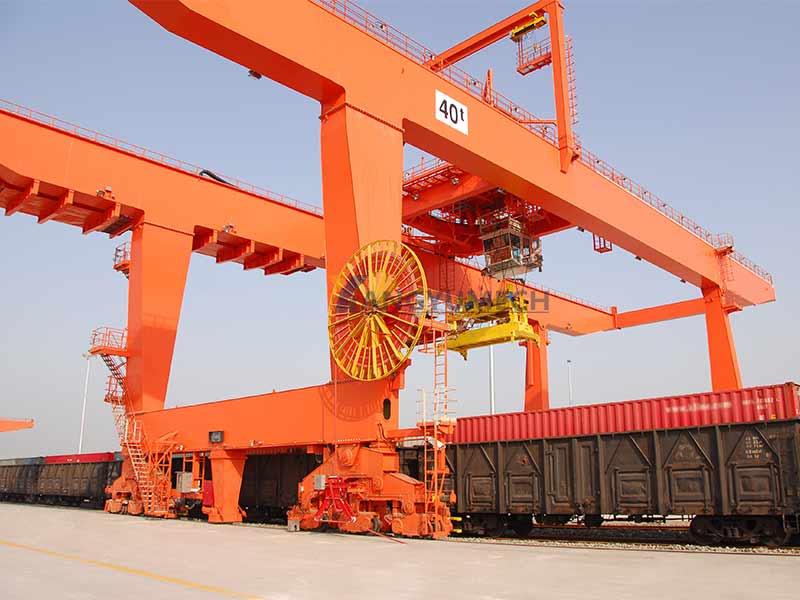
Yangyumech Port Cranes: Quality Equipment at Competitive Prices
Yangyumech has been supplying port cranes and industrial lifting equipment to customers across Southeast Asia, the Middle East, and beyond for over 20 years.
Our port crane product range includes rubber-tired gantry cranes in standard and electric configurations, rail-mounted gantry cranes for both manual and semi-automated terminal applications, ship-to-shore cranes for container loading and unloading operations, and heavy-duty portal cranes for bulk cargo and general cargo terminals.
Every Yangyumech port crane is engineered to meet the specific demands of tropical operating environments, including high humidity, salt air exposure, and the continuous-duty cycles that characterize busy container terminals.
Our structural designs comply with international standards, and we provide complete documentation packages including CE certification, load test reports, and English-language technical manuals to support project approval processes in any market.
On pricing, Yangyumech offers factory-direct rates that are consistently competitive against both European and domestic Chinese suppliers. An RTG crane from Yangyumech is priced to reflect genuine manufacturing value rather than brand premium, and our engineering team will work with you to optimize the specification so you are not paying for capacity or features your operation does not require.
For terminal operators evaluating RTG crane prices or RMG crane costs for an upcoming expansion project, we recommend requesting a detailed quotation with a full specification breakdown rather than comparing headline numbers alone.
If you are planning a terminal expansion in Southeast Asia or any other region and need a reliable port crane supplier with proven export experience, contact Yangyumech.
We will provide a project-specific proposal covering equipment specifications, pricing, delivery schedule, and after-sales support, giving you the information you need to make a confident procurement decision.