
When procurement teams evaluate industrial lifting equipment, bridge cranes and gantry cranes are the two categories most frequently compared. First-time buyers often face a common confusion: both machines appear to be “large beams with wheels,” so how do you choose between them? In reality, the differences in structural design, installation requirements, and application scenarios are substantial. Selecting the wrong type will significantly increase your total cost of ownership down the line.
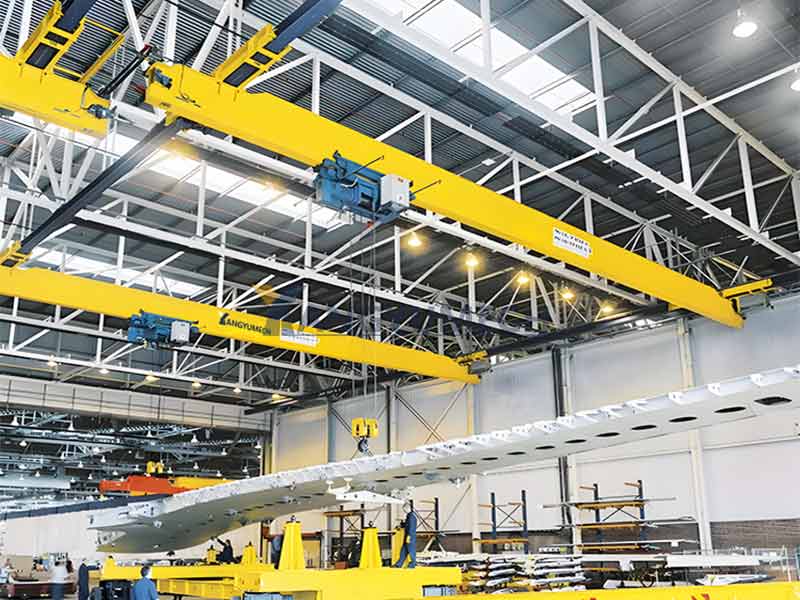
Structural Composition: With Legs or Without
A bridge crane consists of a bridge girder (main beam), hoisting mechanism, trolley traveling mechanism, crane traveling mechanism, and operator cabin. The entire unit spans across rails mounted on opposite sides of a building. The bridge girder itself does not provide vertical support. It relies entirely on the building structure to carry the load. This design means bridge cranes cannot function independently and must be paired with a fixed building structure.
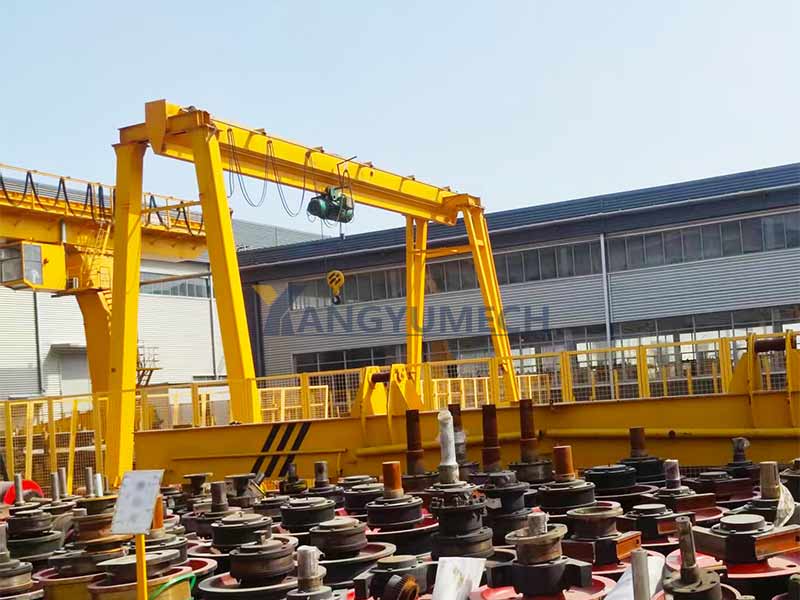
The structural composition of a gantry crane is fundamentally different. In addition to the bridge girder, hoisting mechanism, and trolley, the most distinctive feature of a gantry crane is the presence of legs (or portal legs) on both sides. These legs are mounted on traveling wheels that run on ground-level rails. The entire structure forms a portal frame, making it self-supporting and independent of any building.
From a complexity standpoint, gantry cranes require additional engineering to ensure leg stability and resistance to overturning forces. Consequently, a gantry crane typically uses more material and has greater self-weight than a bridge crane of equivalent lifting capacity. This is one reason why gantry crane prices are generally higher than bridge crane prices for the same tonnage.
Core Difference: Installation Method Defines Operational Boundaries
The most fundamental distinction between bridge cranes and gantry cranes lies in where they are installed and how they move.
Bridge cranes are installed inside buildings, running on elevated rails mounted on building columns or walls. Their primary advantage is zero ground space occupation, leaving the entire floor area available for production operations, logistics, or material storage. For facilities where land is scarce and maximizing interior space is critical, bridge cranes are the standard specification. The limitation is clear: you need an existing building structure. Without suitable infrastructure, installation is impossible.
Gantry cranes are installed outdoors or in semi-open storage yards, ports, and rail freight terminals, running on ground-level rails. Their greatest strength is independence. They require no building support—just a level surface and rail foundation. This makes gantry cranes ideal for open storage yards, container terminals, and rail freight facilities. The trade-off is ground space consumption and weather vulnerability. Gantry cranes typically cease operations during high winds or severe storms and require wind protection measures when not in use.
In terms of travel range, bridge cranes are confined to the span of their host building and limited longitudinally by building length. Gantry cranes, by contrast, can travel along extensive ground rails, often covering significantly larger yard areas.
Application Scenarios: Indoor Manufacturing vs Outdoor Storage
Typical bridge crane applications center on indoor manufacturing and processing. Machine shops use bridge cranes for loading workpieces and transferring them between operations. Assembly lines rely on bridge cranes for precise positioning of heavy components. Foundries employ metallurgical bridge cranes to transport molten metal. Automotive plants use bridge cranes for die changes and equipment maintenance. These applications share common requirements: frequent, precise lifting operations within an enclosed environment where wind, temperature, and other conditions are controlled.
Gantry crane applications lean toward outdoor bulk material handling. Container terminals use rubber-tired or rail-mounted gantry cranes for container stacking and loading. Rail freight yards employ gantry cranes for bulk cargo handling and railcar marshaling. Large building material markets use gantry cranes to load and unload steel, pipes, and other long items. Shipyards rely on heavy-capacity gantry cranes for hull section lifting and final assembly. These scenarios share characteristics: open work areas, large or heavy loads, and low sensitivity to ground space consumption.
It is worth noting that the two crane types are not mutually exclusive. Large industrial complexes often deploy both: bridge cranes inside buildings for precision machining and assembly, and gantry cranes outside for raw material and finished goods handling, creating an integrated logistics system.
Selection Guidance: Match Your Site Conditions and Operational Needs
If your facility has or plans to construct a standard industrial building, and your primary operations occur indoors, a bridge crane is the more economical and logical choice. It requires lower capital investment, occupies no ground space, and operates regardless of weather conditions, enabling true 24/7 operation.
If your operation takes place in an open storage yard, port terminal, or rail freight facility without suitable building structures, or if you need to cover large outdoor storage areas, a gantry crane is the only viable solution. Despite higher initial investment, its independence and extensive coverage are capabilities bridge cranes cannot match.
A hybrid option exists: the semi-gantry crane, with one leg running on a ground rail and the other side supported by a building structure. This configuration suits facilities where one side adjoins a building and the other side opens to an outdoor storage area.
Yangyumech: Your One-Stop Solution for Bridge and Gantry Cranes
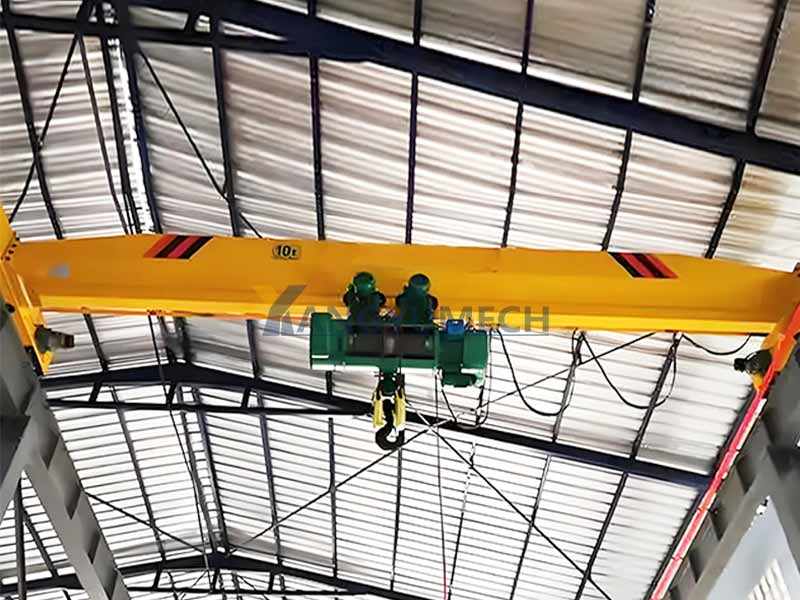
Whether you need a bridge crane or a gantry crane, successful selection depends on accurately matching equipment specifications to your operational environment and duty requirements. Yangyumech brings over 20 years of crane manufacturing experience, offering a comprehensive product range including single girder bridge cranes, double girder bridge cranes, single girder gantry cranes, double girder gantry cranes, and container gantry cranes. Our equipment covers working classes from A3 to A7, with lifting capacities from 1 ton to 500 tons, all customizable to your specifications.
Yangyumech’s core strength lies in providing end-to-end service: from initial consultation and engineering design, through manufacturing and quality control, to installation, commissioning, and after-sales maintenance. Our engineering team evaluates your site conditions, operating frequency, load characteristics, and other factors to provide professional selection guidance, helping you make the optimal decision between bridge and gantry cranes and avoiding costly retrofitting expenses from poor initial choices.
For crane dealers, engineering contractors, and industrial equipment traders, Yangyumech sincerely invites you to establish long-term partnerships. We offer competitive factory-direct pricing, flexible payment terms, complete export documentation including CE certification and English technical manuals, and reliable delivery schedules. Whether you require single units or bulk procurement, we provide the technical expertise and dependable fulfillment capabilities to support your business growth.
If you are planning new facility construction, upgrading existing equipment, or seeking a reliable crane manufacturing partner as a supplier, we welcome you to contact Yangyumech. We will develop customized lifting solutions and partnership programs based on your specific requirements, creating mutual success through collaboration.