
Many companies only realize at installation that incorrect span, limited lifting capacity, or slight errors in lifting height can halt normal operations. Fixing these mistakes requires redesign, delaying projects, and increasing costs. Actually, getting these three parameters right when quoting saves far more trouble than rushing.
How to Select the Span: This Number Is Most Easily Overlooked
The span of a bridge crane, simply put, is the distance between the centerlines of the two rails. There is only one core principle for selecting the span: the overhead crane’s span must be less than the workshop span, leaving sufficient clearance between the two to ensure safe passage for personnel, equipment maintenance, and safe operation.
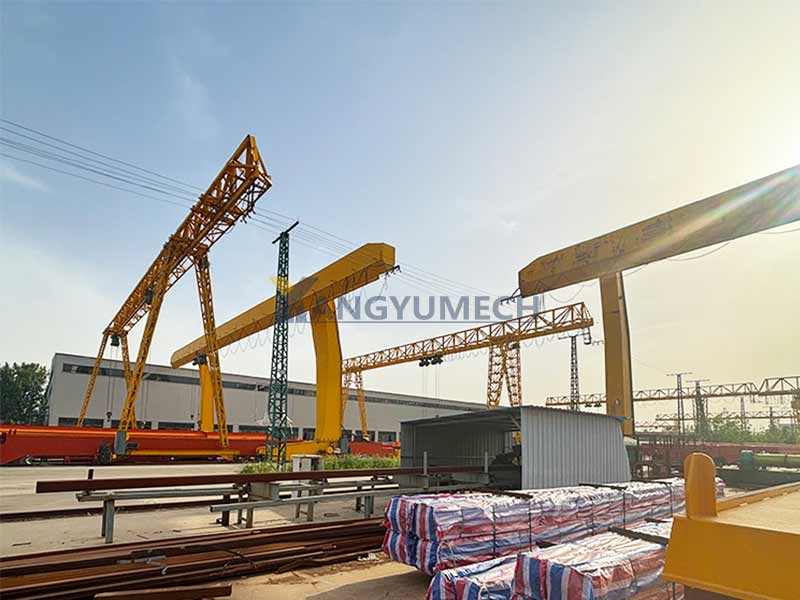
When selecting a model in practice, here are some empirical values to reference:
Light-duty workshops: Crane span ≈ Workshop span – 1.0–1.5 meters
Heavy-duty workshops: Crane span ≈ Workshop span – 0.5 to 0.75 meters
For example, if the workshop span is 24 meters, the bridge crane span is typically selected to be around 22.5 meters, leaving a 75-centimeter clearance on each side—sufficient space for personnel to pass sideways and perform maintenance operations.
These two scenarios require different approaches. For existing tracks, the span is fixed. For new workshops, calculations must consider clearances, track type, support placement, and possible structural intrusions. Errors here most often lead to track modification.
How to Determine the Rated Capacity: It’s Not Just About the Heaviest Load
Rated capacity—commonly referred to as “tonnage”—is the parameter clients ask about most frequently and are most likely to select incorrectly.
There is one fundamental principle to understand when selecting the rated capacity: it must cover not only the weight of the heaviest single load but also the total weight of the heaviest single load plus all lifting accessories.
Specifically:
If the heaviest single load is 7 tons and a 1-ton lifting beam is used, the gantry crane capacity should be selected for 8 tons or more.
If operations frequently approach the maximum load capacity, do not select a capacity that is just barely sufficient. It is generally recommended to multiply the actual maximum load by a safety factor of 1.15 to 1.25; this is the reasonable capacity for selection.
Approximate ranges by industry:
Machine manufacturing and assembly workshops: Commonly 5–20 tons
Steel smelting and heavy-duty processing: Commonly 20–75 tons
Large-scale forging and metallurgical casting workshops: 75 tons and above; special processes may reach 450 tons or higher
One point that is often overlooked: The rated lifting capacity listed in the specifications refers to the maximum lifting capacity at the standard working radius or directly below the hook. If long-distance diagonal lifting is required, the effective lifting capacity will decrease. This impact is particularly noticeable during outdoor operations and when lifting across workshops.
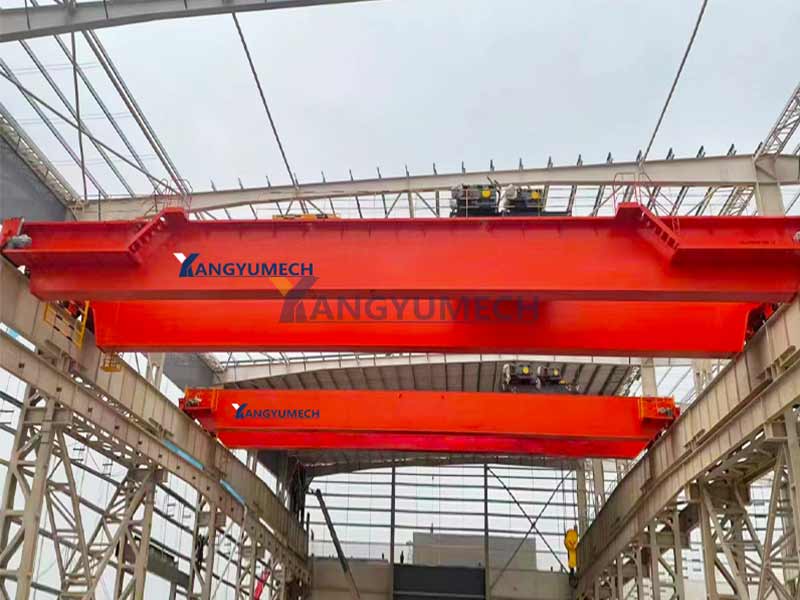
Lifting Height Standards: Hook-to-floor height is not the same as the building’s clear height.
Lifting height, also known as effective lifting height, refers to the vertical distance between the lowest and highest positions of the hook. It is measured from the hook, not from the ground to the ceiling.
Standard lifting heights for bridge cranes start at 12 meters, with increments of 2 meters per level, and can reach over 32 meters. Heights exceeding 32 meters typically require customization.
Determining The Appropriate Lifting Height Depends On Three Factors
First, the actual required hook-to-floor height. This height refers to the vertical distance from the floor to the highest material handling point. For example, if a hook-to-floor height of 9 meters is required, a overhead crane with a 9-meter lifting height cannot be selected—the hook head and drum assembly occupy vertical space. Typically, a 16-meter lifting height is needed to accommodate the 9-meter clearance plus sufficient upper safety margin.
Second, multi-level stacking and platform operations. If the workshop features multi-level storage, mezzanine platforms, or requires materials to be placed on a second-level platform for use, the lifting height should generally be 18 meters or more. Such requirements must be clearly communicated to the manufacturer during the selection phase, as they directly impact the design of the drum diameter, the number of wire rope layers, and the overall height of the gantry crane.
Third, roof clearance and gantry space requirements. The crane gantry itself occupies vertical space, and the highest point of the gantry is not the lowest obstacle in the facility. Before selecting a model, it is essential to verify whether there is sufficient safety clearance between the gantry and the roof beams, air ducts, and fire sprinkler pipes when the overhead bridge crane reaches its highest point.
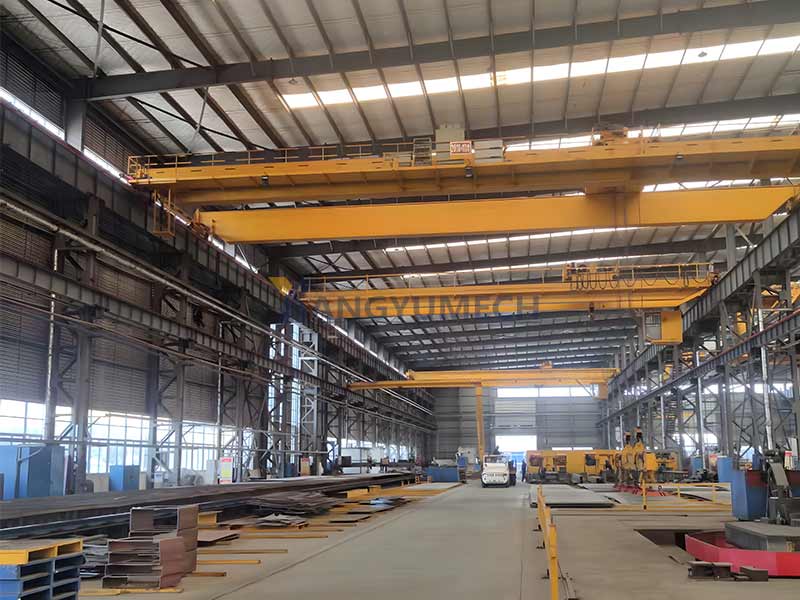
Three Parameters: Finalize Them Before Requesting a Quote
Before formally requesting a quote from the manufacturer, it is recommended to confirm the span, lifting capacity, and lifting height in writing. At the same time, specify the expected duty cycle (light, medium, heavy, or extra-heavy), as this directly determines the motor power.
If you are comparing bridge crane manufacturers, Yangyumech is definitely worth considering. Yangyumech specializes in the engineering and manufacturing of bridge cranes and has accumulated extensive practical experience in span design, load capacity selection, and customization of lifting heights.
While ensuring the accuracy of our specifications, our bridge crane prices remain highly competitive compared to other manufacturers, making us the brand of choice for many companies after they have compared prices across the board.