
Most facilities running overhead cranes, gantry cranes, or jib cranes have experienced the same frustration: a machine that was running fine on Monday fails catastrophically on Wednesday, bringing an entire production line to a halt. The breakdown feels sudden. In reality, it almost never is. By the time a winding motor or a fatigued hoist rope gives out, the warning signs have been there for weeks — they just were not being read. Predictive maintenance for cranes is built on the idea that those signals should not be ignored. Both predictive maintenance for cranes and preventive maintenance for cranes have a role to play in a comprehensive industrial crane maintenance strategy — but they work differently and deliver different results. Rather than scheduling maintenance interventions on a fixed calendar, or reacting after something breaks, predictive maintenance lets maintenance teams intervene at the right moment: when the data says intervention is needed, not before, and not after.
The results from facilities that have adopted structured predictive maintenance programs for their crane fleets are consistent. Crane downtime in facilities that rely on reactive maintenance — fixing things after they break — typically runs two to three times higher than in facilities with structured crane maintenance programs in place. In well-documented cases across steel mills, shipyards, and large logistics operations, facilities have reduced unplanned crane downtime by 30 to 40 percent within the first year of implementation. The key is not the monitoring technology itself — it is the systematic process of translating monitoring data into maintenance decisions.
What Predictive Maintenance Actually Looks Like in Practice
A credible predictive maintenance program for overhead cranes rests on three capabilities working together.
The first is sensor-based condition monitoring. In an overhead crane maintenance or eot crane maintenance program, the most critical monitored components are the hoist motor, gearbox, brakes, and wire rope assembly. Vibration sensors on hoist gearboxes, temperature sensors on motor windings, and load sensors on lifting mechanisms feed data into a monitoring platform. Anomalies in this data — whether a rising temperature trend or an unusual vibration pattern — flag developing issues before they become failures.
The second capability is data-driven failure mode analysis. Not every sensor reading that deviates from baseline signals an imminent failure. Knowing which readings matter in which operating contexts — the difference between a high-cycle automotive application and a low-cycle outdoor gantry crane — is what separates a useful predictive maintenance program from a noisy alarm system. Bridge crane maintenance teams in particular benefit from this approach because bridge crane configurations — with long span beams, multiple drive motors, and distributed load paths — have more potential failure points than simpler crane configurations.
The third capability is a structured intervention protocol. Predictive maintenance only delivers its value when it results in planned maintenance windows rather than emergency shutdowns.
Common Failure Patterns by Crane Type
Different crane types develop different failure patterns, and understanding which problems to watch for in each category is essential for any crane troubleshooting process. A good crane maintenance guide should address each crane type specifically.
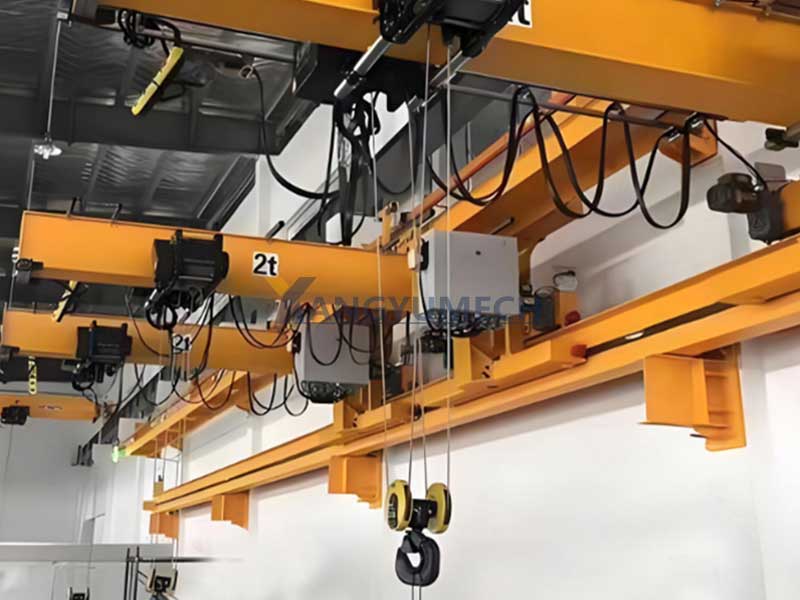
Overhead EOT cranes — the most common industrial crane maintenance scenario — most commonly develop problems in three areas: hoist motor winding insulation degradation, brake wear on trolley and hoist drives, and wire rope deterioration. Motor winding issues often surface as a gradual increase in current draw before the insulation fails completely. Brake wear in high-cycle applications can be tracked through pad thickness monitoring. Wire rope condition should be monitored through regular inspection and diameter measurement.
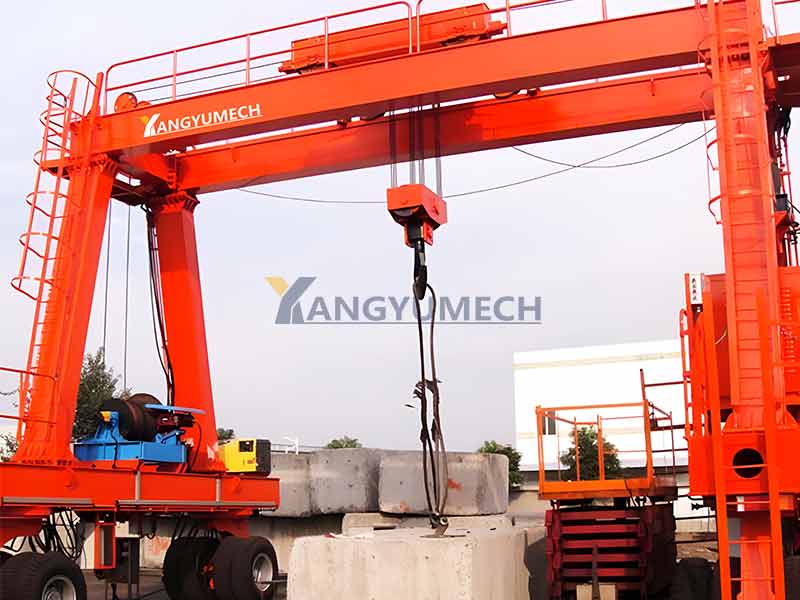
Electric gantry cranes operating outdoors face a different set of challenges. Corrosion on structural connections and electrical enclosures in humid or coastal environments is a leading cause of unexpected failures. Water ingress into motor housings and control cabinet wiring accounts for a significant share of gantry crane downtime in outdoor applications. Predictive gantry crane maintenance programs should include environmental condition tracking alongside mechanical monitoring.
Jib cranes frequently develop issues at the pivot bearing and the wall or pillar connection points. Jib crane maintenance programs should prioritize pivot bearing inspection as the most frequent intervention point. Bearing wear in this location often goes unnoticed until it produces noticeable play or irregular motion.
How to Build a Practical Reduction in Downtime
The path to a 40 percent reduction in unplanned crane downtime does not require a complete overhaul of maintenance operations on day one. In most cases, the most effective starting point is to instrument the most failure-prone maintenance crane in the facility and begin tracking baseline condition data for a 60-to-90-day period.
Crane maintenance tips from experienced engineers consistently point to the importance of this baseline phase — it is what allows the monitoring system to separate normal operation from genuine anomalies. Use a crane maintenance checklist to record inspection findings and build a reference library of crane failure patterns specific to your facility.
That baseline becomes the reference point. Once established, anomalies stand out clearly, and the maintenance team can build a track record of how specific sensor patterns correlate with actual failures. Over time, the program becomes more accurate — catching real failures before they happen while reducing false alarms.
Yangyumech Crane Quality and After-Sales Support
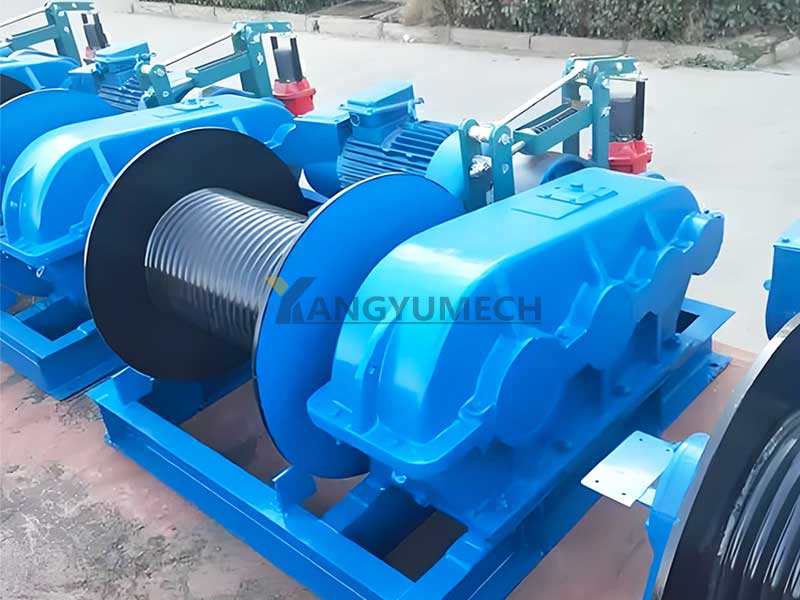
Beyond the monitoring technology, the quality of the crane equipment itself plays a significant role in how reliably it performs over its operational lifespan. Yangyumech engineers and manufactures overhead cranes, gantry cranes, jib cranes, and wire rope hoist systems with a documented quality management system aligned to international standards. Every crane undergoes dimensional and load testing before dispatch, and the company provides full FEM calculation documentation, CE certification packages, and material test certificates as standard for export orders.
Yangyumech also supplies a full range of crane accessories and spare parts systems to support long-term crane repair and crane maintenance services. Genuine replacement components — including brake pads, wire rope assemblies, hook blocks, limit switches, and electric control system components — are available for all standard crane models in the product range. For facilities operating Yangyumech equipment, access to genuine spare parts simplifies inventory management and helps ensure that maintenance interventions use correctly specified components.
If you are evaluating crane equipment for a new project or looking for a reliable source of crane parts and crane maintenance services, the Yangyumech team welcomes your inquiry. We provide competitive pricing on crane systems and on the accessories and spare parts that keep your equipment running reliably over the long term.