
Anyone who has managed a construction site or an industrial yard powered by diesel cranes knows the drill. Fuel deliveries that never arrive on time. Engine service bills that climb every quarter. Noise complaints from neighboring facilities. And lately, emissions regulations that seem to tighten with each new policy cycle. The operating cost question is not a minor detail buried in a procurement spreadsheet—it is the single factor that often determines whether a lifting operation runs at a comfortable margin or bleeds cash month after month.
Electric overhead cranes have been gaining ground steadily in the global material handling market, and the cost argument is a large part of why. But how much do you actually save when you swap a diesel-powered lifting unit for an electric crane? The answer depends on utilization patterns, local energy pricing, and the type of work being performed, but the general direction is unambiguous. Across most industrial scenarios, electric crane operating costs come in dramatically lower than their diesel counterparts, and the gap is widening as energy markets shift.
The Raw Numbers: Diesel Versus Electric Crane Operating Costs
A medium-capacity diesel crane operating at a typical construction or industrial site consumes somewhere between 8 and 15 liters of diesel per hour, depending on load profile and idle time. At current European fuel prices averaging roughly EUR 1.70 per liter, that translates to an hourly fuel cost ranging from EUR 13.60 to EUR 25.50. Over a 2,000-hour annual operating cycle, fuel expenditure alone lands between EUR 27,200 and EUR 51,000 per machine per year.
An electric overhead crane of comparable lifting capacity draws approximately 30 to 80 kilowatt-hours per operating hour, again depending on load factor and duty cycle. At an average industrial electricity rate of EUR 0.18 per kWh in Western Europe, the same 2,000-hour operating year produces an electricity bill of EUR 10,800 to EUR 28,800. Even at the high end of electric consumption and the low end of diesel burn, the electric crane holds a clear cost advantage. In practical terms, operators who make the switch report annual energy cost reductions between 40% and 60%, with savings most pronounced in multi-shift operations where the crane runs near continuously.
Maintenance tells a similar story. Diesel engines require oil changes, filter replacements, turbocharger servicing, exhaust aftertreatment system upkeep, and periodic injector calibration. These recurring service items typically add EUR 5,000 to EUR 12,000 per year to the operating ledger for a single crane. Electric motor drive systems, by contrast, have far fewer wearing components. No oil changes, no fuel filters, no exhaust systems to maintain. Annual preventive maintenance for an electric wire rope hoist crane or electric chain hoist crane generally runs 50–70% less than for a comparable diesel unit.
Electric Crane Types and Their Cost Profiles
Not all electric cranes carry the same operating economics, and understanding these differences matters when building a cost comparison for a specific facility.
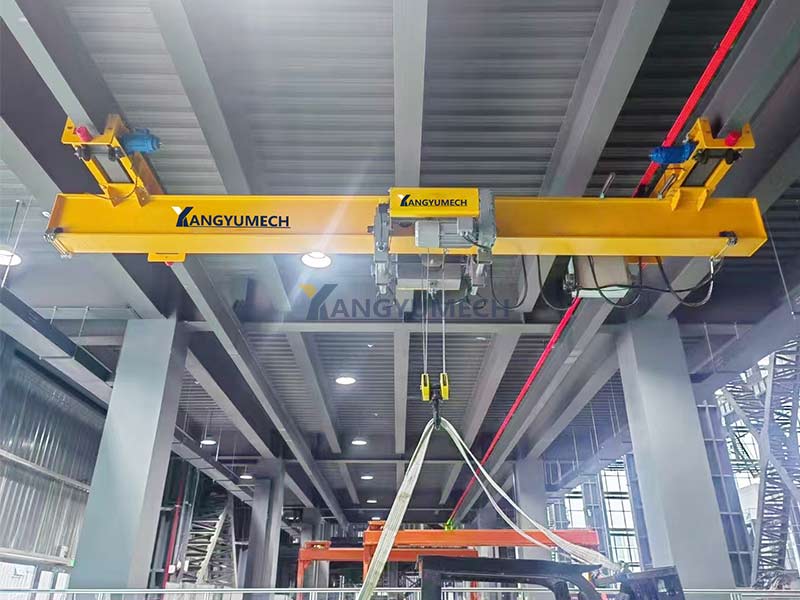
The electric overhead travelling crane, commonly called an EOT crane, is the backbone of indoor industrial lifting. Available in single girder and double girder configurations, these units run on shop power and benefit from regenerative braking systems on larger installations—meaning that during lowering operations, the motor actually feeds energy back into the plant grid rather than dissipating it as heat. In facilities with high duty cycles, regenerative energy recovery can reduce net electricity consumption by an additional 10–15%, further widening the cost gap against diesel.
For outdoor and semi-outdoor applications, the electric gantry crane has become the go-to alternative to diesel-powered mobile cranes for repetitive lifting tasks. A rail-mounted electric gantry crane handling shipping containers or steel coils at a port or yard operates at a fraction of the per-lift energy cost of a diesel straddle carrier or reach stacker covering the same workload. The tradeoff is infrastructure—gantry rails and power supply must be installed—but for operations with predictable, repetitive lifting patterns, the payback period on that infrastructure investment typically falls between 18 and 36 months.
Electric jib cranes and electric workstation cranes serve lighter-capacity applications in assembly areas, maintenance bays, and loading docks. Their operating costs are negligible compared to any diesel alternative, often running under EUR 500 per year in electricity for intermittent use patterns. These units also eliminate the ventilation and exhaust management concerns that come with running a diesel engine indoors, which removes another layer of compliance cost from the equation.
Where the Savings Compound
The cost comparison extends beyond energy and maintenance line items. Diesel cranes carry several indirect cost burdens that electric alternatives avoid entirely.
Insurance premiums for diesel-powered lifting equipment tend to run higher due to the elevated fire and environmental spill risk associated with on-board fuel storage. Facilities operating diesel cranes indoors or in semi-enclosed spaces face additional ventilation system costs, and in jurisdictions with carbon pricing mechanisms, each ton of diesel-generated CO2 carries a direct financial penalty that will only increase as emissions trading schemes expand.
Noise is another factor with real financial consequences. Diesel overhead crane operations in urban or residential-adjacent locations frequently face restricted working hours, which compresses available operating windows and reduces daily throughput. Electric cranes, operating at noise levels 15–25 decibels lower than equivalent diesel machines, can often work extended or even round-the-clock shifts without triggering noise ordinance limits, directly translating to higher asset utilization and faster project completion.
Yangyumech: Electric Crane Manufacturing You Can Rely On
At Yangyumech, we are an established crane manufacturer producing a comprehensive range of electric cranes designed to help industrial operators capture exactly the kind of cost savings outlined above. Our product line spans from light-duty electric chain hoist cranes and workstation cranes up through heavy-duty double girder electric overhead cranes with capacities reaching 500 tons. Every unit is engineered for low lifetime operating cost, with energy-efficient drive systems, low-maintenance components, and construction quality that keeps downtime to an absolute minimum.
We supply electric crane equipment to industrial crane distributors, project contractors, and end-use customers worldwide. Whether you operate a single-bay maintenance workshop or a multi-crane steel production complex, we can configure a lifting solution matched to your capacity requirements, duty classification, and power supply specifications—at a price point that respects your procurement budget.