
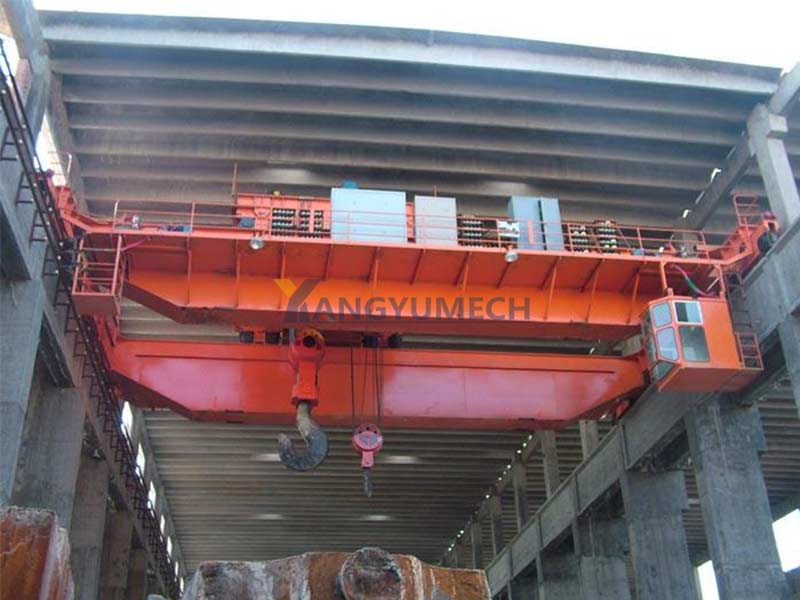
Not all overhead bridge cranes are built to the same standard. Walk into two different facilities with the same tonnage and span on paper, and the cranes inside can be worlds apart in how they are constructed, how they operate, and how long they last. The difference comes down to one thing: the duty classification the crane was designed for. Understanding the gap between general duty and metallurgical duty overhead cranes helps you avoid buying equipment that fails prematurely, and helps you avoid paying for overkill when a simpler machine would serve just fine.
What Duty Classification Actually Means
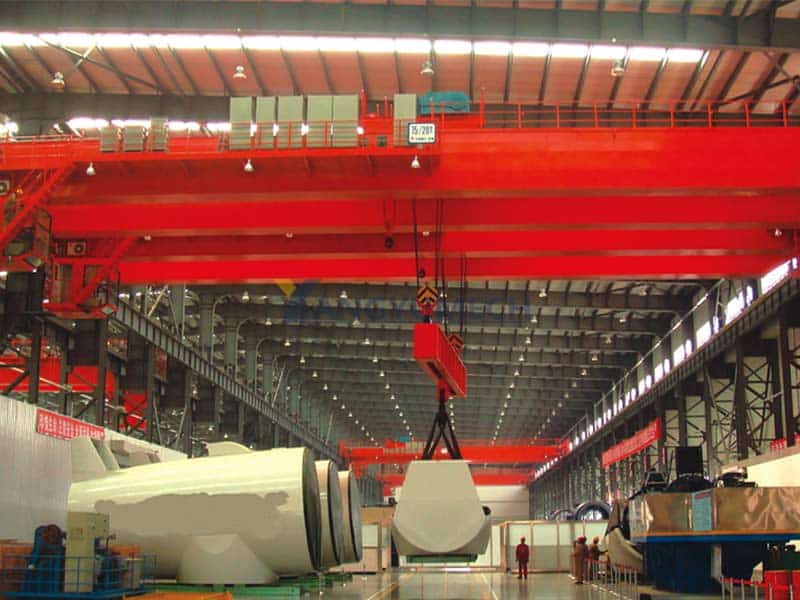
Duty classification describes how intensively a crane is expected to operate over its service life. The classification accounts for the total number of lift cycles the crane will make, the percentage of time it spends lifting at or near maximum capacity, and the environment it operates in. Two cranes that look identical on a specification sheet can have radically different internal designs based on their intended duty rating.
FEM and CMAA standards define these classifications numerically. FEM 9.511 groups cranes into Classes I through VI, while CMAA specifies Service Classes A through F, with D representing standard industrial use, E representing heavy industrial, and F representing severe service. The classification drives everything from girder wall thickness and reinforcement pattern to motor sizing, brake capacity, and the design of mechanical connections that experience repetitive stress.
A crane specified for Class D general duty service operates under assumptions that are fundamentally different from Class F severe service. If you put a Class D crane into Class F conditions, the machine will wear out years ahead of schedule. If you buy Class F equipment for Class D applications, you have paid for capacity you will never use.
General Duty Overhead Cranes: Standard Industrial Applications
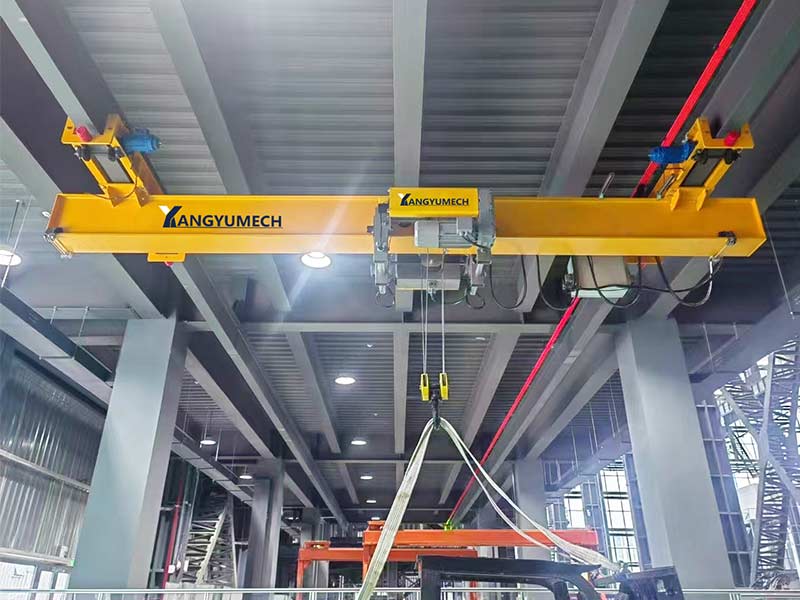
General duty overhead cranes cover the majority of industrial lifting needs. These Class D machines serve warehouses, machine shops, light fabrication facilities, and manufacturing operations where lifting is part of the workflow but not the core of the production process. Think of a crane that makes 20 to 40 lifts per hour at moderate capacities—warehouse operations, general fabrication, component assembly.
The structural design of a general duty overhead crane prioritizes cost efficiency within acceptable performance limits. Girder sections use standard structural steel profiles rather than the extra-heavy wall boxes found in severe duty machines. Motors are sized for intermittent operation, and braking systems are designed for the stopping requirements of normal industrial lifting rather than the rapid cycling that defines heavy manufacturing environments.
Control systems on general duty industrial bridge cranes typically use pushbutton pendants with basic limit switches and overload protection. Variable frequency drives are increasingly common even in standard duty applications, improving speed control and reducing load swing, but the overall drive and control system complexity stays below what heavy industrial applications demand.
The real advantage of general duty overhead cranes is their cost efficiency for the right application. A standard Class D overhead bridge crane for industrial manufacturing delivers reliable service at a price point that makes sense for operations where lifting is important but not the central production activity.
Metallurgical Overhead Cranes: Built for Demanding Environments
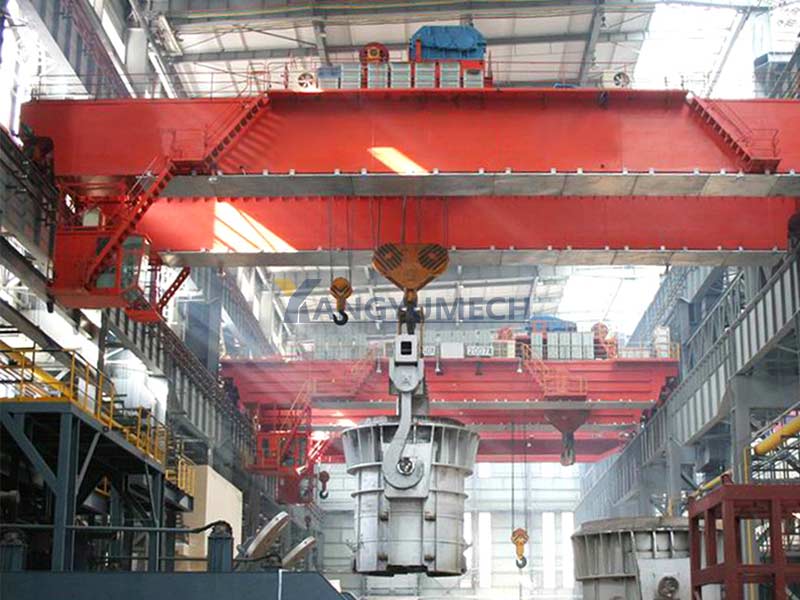
Metallurgical overhead cranes serve the melt shop, the rolling mill, and the forge—applications where lifting is continuous, loads are heavy, and the environment is harsh. These machines operate at Class E or Class F duty levels, with designs that assume hundreds of lifts per shift, frequent operation at or near rated capacity, and environmental conditions that would destroy standard equipment.
The structural jump from general duty to metallurgical overhead crane design is substantial. Girder sections use reinforced box construction with significantly heavier flanges and webs. Welded joint details account for the fatigue loads that accumulate over millions of operating cycles. Wheel assemblies, drive systems, and wire rope hoists are all oversized relative to rated capacity, providing margin that extends service life under severe operating conditions.
Motors in metallurgical overhead cranes for steel plant applications run hotter and longer than their industrial counterparts. Enclosure ratings move up from standard industrial to IP55 or higher to protect against the dust, moisture, and chemical exposure common in metallurgical environments. Braking systems on hot metal handling cranes include redundant holding brakes and emergency stop circuits that meet the stringent safety requirements of melt shop operations.
Control systems on heavy industrial overhead cranes typically include radio remote operation, variable frequency drives on all motions, and integration with process control systems. Many Class F metallurgical cranes operate semi-automatically, with programmable lift positions synchronized to the production equipment they serve.
Where the Difference Shows: Applications and Environments
The clearest way to understand general duty versus metallurgical overhead cranes is through the applications each serves. General duty industrial overhead cranes work well in machine shops, maintenance bays, and manufacturing operations where cycle rates stay moderate and environmental conditions are controlled. A general purpose bridge crane for a fabrication shop handling steel plate several times per shift operates well within its design parameters.
Metallurgical overhead cranes for steel plant service handle the continuous heavy lifting that defines primary metal production. Charging cranes moving scrap buckets into electric arc furnaces, slab handling cranes serving rolling mills, and ladle cranes positioning molten metal transfer vessels all operate under conditions that would quickly destroy general duty equipment. These applications demand Class E or Class F duty ratings with enclosures, braking systems, and structural margins matched to the severity of the work.
Foundry cranes for metal casting operations present similar demands. The combination of hot metal exposure, heavy repetitive loads, and continuous operating cycles pushes crane requirements well beyond what standard industrial overhead cranes can handle reliably.
Choosing the Right Crane for Your Application
The decision between general duty and metallurgical overhead crane design comes down to honest assessment of your actual operating conditions. How many lifts per hour does your operation demand? What percentage of those lifts run at maximum rated capacity? What is the ambient environment—controlled temperature, dusty fabrication, hot melt shop? These questions have concrete answers, and the answers drive the classification you need.
Specifying a metallurgical overhead crane for general duty applications wastes money on capacity your operation will never use. Specifying a general duty bridge crane for heavy industrial or metallurgical service wastes money on premature failures and downtime that will cost far more than the original price difference. Getting the classification right from the beginning is one of the highest-value decisions in crane procurement.
Yangyumech Bridge Cranes: Built to Your Duty Requirements
Yangyumech manufactures overhead bridge cranes across the full duty spectrum, from standard Class D general duty machines to heavy Class F metallurgical overhead cranes for the most demanding steel plant and foundry applications. Our engineering team works with each customer to specify the right duty classification for their actual operating conditions—no upselling to more crane than you need, no underselling to equipment that will fail under your workload.
Every Yangyumech overhead bridge crane uses heavy structural steel sections, enclosed drive systems, and quality components matched to the application. Our FEM and CMAA-rated metallurgical overhead cranes feature reinforced girder construction, high-duty-cycle hoist assemblies, and motor enclosures rated for steel mill and foundry environments. General duty machines are designed for reliable industrial operation without unnecessary heavy-duty features that add cost without adding value for your application.
We sell directly from our manufacturing facility, which means competitive pricing on general duty and metallurgical overhead cranes alike. Standard models ship within published lead times, and our engineering team handles custom configurations for specialized metallurgical applications.