
Walk into almost any modern waste-to-energy facility or municipal solid waste processing plant, and the first piece of equipment you will notice overhead is the waste handling crane. These machines do not look like standard factory overhead cranes, and for good reason. The working conditions inside a waste bunker are fundamentally different from a machine shop or a steel warehouse — corrosive off-gas, dust, variable load weights, and continuous operation around the clock. Waste treatment plant cranes are purpose-built for this environment, and understanding what makes them different helps facility owners and engineers specify the right equipment for their next project.
What Makes a Waste Treatment Plant Crane Different
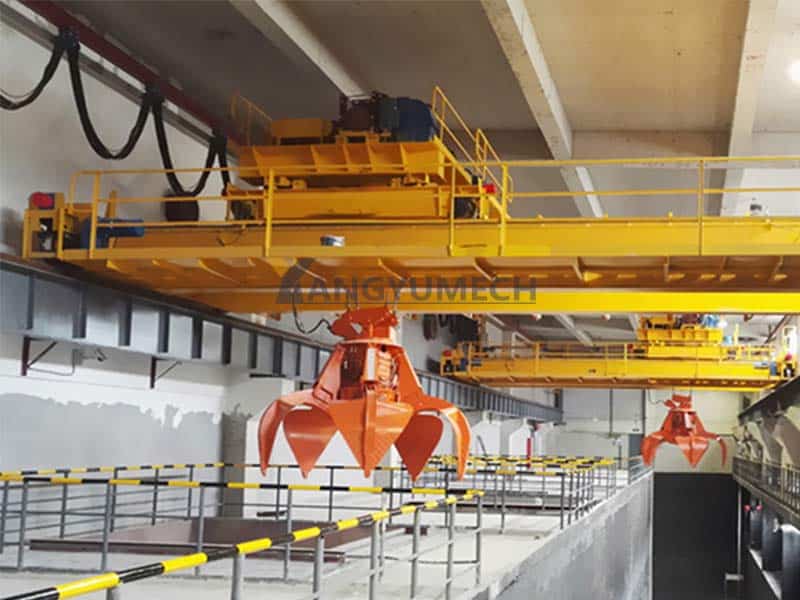
A waste handling crane operates inside a deep concrete bunker or waste pit where incoming refuse is stored before it enters the incinerator, shredder, or sorting system. The crane picks up mixed waste from the bunker, moves it to the furnace charging hopper or feed conveyor, and mixes the pile to prevent hot spots and ensure consistent combustion conditions. Some facilities use a single crane for all three tasks; larger plants run two or three cranes to maintain continuous feeding while one unit is in maintenance.
The operating environment is what drives the engineering differences between a waste crane and a standard overhead crane. Waste bunkers generate hydrogen sulfide, ammonia, and other corrosive gases that attack standard motor enclosures, electrical connections, and structural steel. A waste treatment plant crane uses IP55 or higher motor enclosures, corrosion-resistant paint systems on structural members, sealed electrical junction boxes, and stainless-steel components on exposed surfaces. The operator cabin is pressurized with filtered air to keep corrosive atmosphere and dust out of the working space.
Duty classification for waste handling cranes typically falls in the A7 to A8 range under the FEM standard. These cranes operate continuously, making hundreds of grab cycles per shift, often at or near rated capacity because the density of mixed municipal waste varies unpredictably. A load that appears small in volume can be dense with metal, construction debris, or wet organic material. The crane structure and drive systems must handle this variability without derating or premature wear.
Key Applications of Waste Handling Cranes
The most visible application is the refuse bunker in a waste-to-energy incineration plant. The crane moves waste from the receiving area to the furnace feed hopper, mixes the waste pile to homogenize moisture content and calorific value, and manages bunker inventory to maintain a consistent feed rate to the incineration line. Plants that burn 500 to 3000 tons of waste per day typically operate two or more waste cranes on parallel runways, with one crane always available for furnace feeding and a second crane handling bunker management or maintenance duty.
Biomass power plants use a similar crane configuration for handling wood chips, agricultural residue, and processed biomass fuel. The grab bucket for biomass differs from a waste grab because the fuel is more uniform in density and size, but the crane structure, duty rating, and environmental protection requirements are comparable.
Waste transfer stations and material recovery facilities sometimes install overhead cranes with grab buckets to move bulk recyclables, construction and demolition debris, or composting material. These applications often use lighter-duty cranes at A5 to A6 classification because the cycle rates are lower than in continuous incineration plants. However, the corrosion protection and dust management requirements remain important because the waste material generates dust and off-gas even when the facility is not processing at incineration rates.
Grab Buckets for Waste Handling: Which Type Works Where
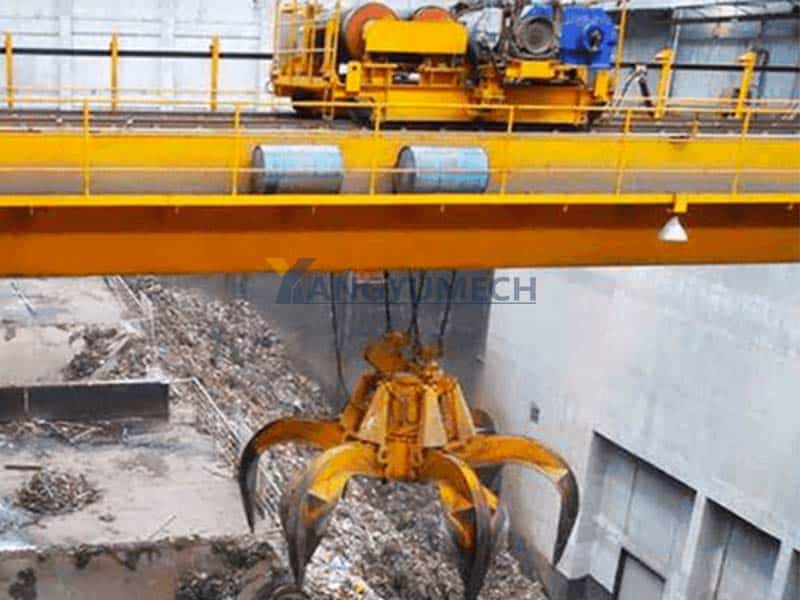
The grab bucket is the business end of the waste crane, and choosing the right bucket design has a direct impact on handling capacity, bunker management quality, and grab reliability. Waste treatment plants use several grab types depending on the material being handled.
The orange peel grab is the standard choice for mixed municipal solid waste. The curved tines close around loose, irregular material and penetrate the waste pile effectively. Orange peel grabs for waste applications typically have 6 to 8 tines made from wear-resistant steel, with a closing force that allows the tines to grip compacted refuse and pull it free from the bunker face. The open-top design allows the grab to release material quickly at the furnace hopper without clogging.
Clamshell grabs work better for more uniform materials like shredded waste, wood chips, or processed compost. The two-shell design provides a larger volumetric capacity per grab cycle compared with an orange peel of the same weight, which translates to higher throughput when the material consistency allows clean scooping without bridging or clogging.
Motorized grabs for waste handling include their own electric motor and closing mechanism, allowing the crane to lift and travel with a full grab without depending on the crane hoist rope for closing force. This independence means the grab can open and close during positioning, reducing cycle time. Hydraulic grabs use an onboard hydraulic power unit to drive the closing mechanism, providing higher closing force for dense or compacted waste that motorized grabs struggle to grip.
Specifying a Waste Treatment Plant Crane
When evaluating suppliers for a waste handling crane, the critical specifications to address are the bunker dimensions and geometry, the required duty classification based on planned operating hours and grab cycles per shift, the waste material type and expected density range, the corrosive environment classification for electrical and structural protection, and the grab bucket type matched to the material characteristics. Underestimating any of these factors leads to either overpriced equipment or a crane that cannot sustain the operating demands of the facility.
Yangyumech Waste Handling Cranes and Pricing
Yangyumech manufactures waste treatment plant cranes across the full range of applications, from small biomass handling units to large-scale municipal solid waste cranes for waste-to-energy incineration plants. Our product line includes overhead grab bucket cranes for waste bunkers, gantry cranes for outdoor waste storage and transfer applications, and purpose-built refuse handling cranes with pressurized operator cabins and corrosion-protected structures.
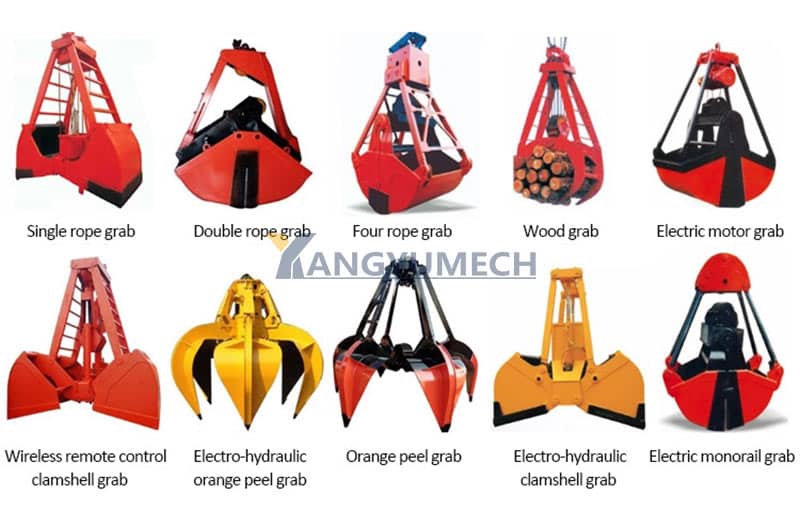
Our waste handling cranes are built to A7 and A8 duty classifications, with IP55 motor enclosures, corrosion-resistant coating systems rated for H2S exposure, and stainless-steel components on all surfaces exposed to the waste bunker atmosphere. Grab buckets are available in orange peel, clamshell, and motorized configurations, with bucket volume and tine design matched to the specific waste material of each project.
Yangyumech also supplies a complete range of industrial cranes for other applications: single and double girder overhead cranes, gantry cranes, semi-portal cranes, jib cranes, and electric hoists. All products are manufactured under ISO 9001 quality management, with CE and FEM compliance for international projects.
Direct factory pricing from Yangyumech means competitive costs on waste handling cranes and all crane equipment. Standard configurations are priced competitively against comparable European manufacturers at a fraction of the cost. We provide detailed technical proposals, 3D layout drawings, and project-specific engineering for every inquiry.