
Home » Products » Gantry Crane » Ship Loader
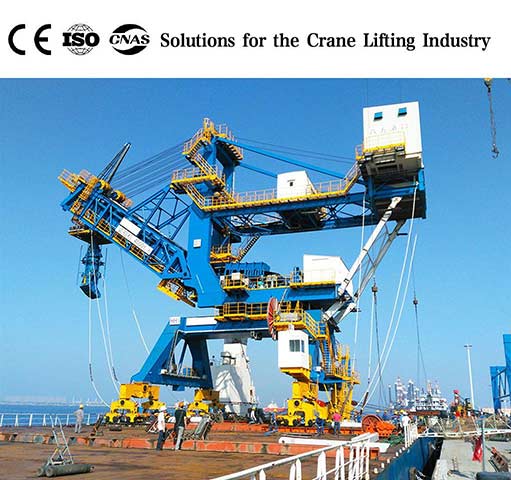
Ship Loader
Ship Loader – Efficient and reliable bulk material handling is critical for smooth port operations. That’s why Yangyumech provide expertly designed ship loaders that seamlessly integrate with your port infrastructure and ensure optimal performance for your specific requirements.
• Loading capacity: 1,000 t/h to 20,000 t/h
• Vessel size: 5,000 DWT to 350,000 DWT
• Systems specifically designed to your unique requirements
Description
A shiploader is a large machine used for continuously loading bulk solid materials such as iron ore, coal, fertilizers, grains and/or material in bags onto ships or barges. These machines are located in ports and jetties to facilitate bulk material exportation. Generally shiploaders are engineered to suit specific project requirements. Those requirements often include: port design, material characteristics, loading capacity, vessel type.
When selecting and designing a ship loader, the quality and properties of the bulk material, local conditions, performance parameters and environmental requirements play a decisive role.
With these aspects in mind, our engineers determine the most effective and cost-efficient handling principle while minimising operational and maintenance requirements. The customised loading system must fit in your port infrastructure and match current and future vessel sizes. Whether it’s coal, aggregates, mineral compounds, or other bulk materials, our ship loading systems deliver robust performance to keep your operations running smoothly.
Features
Rail-mounted mobility
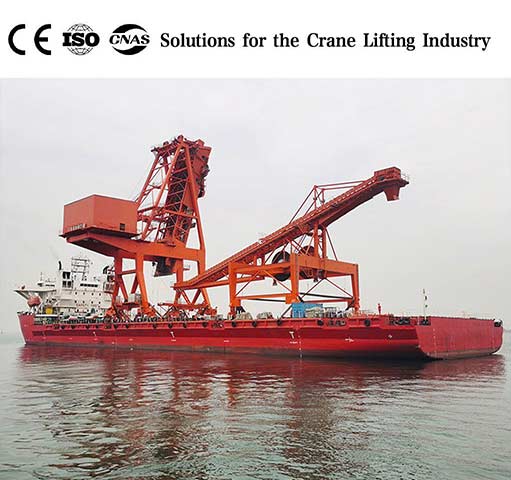
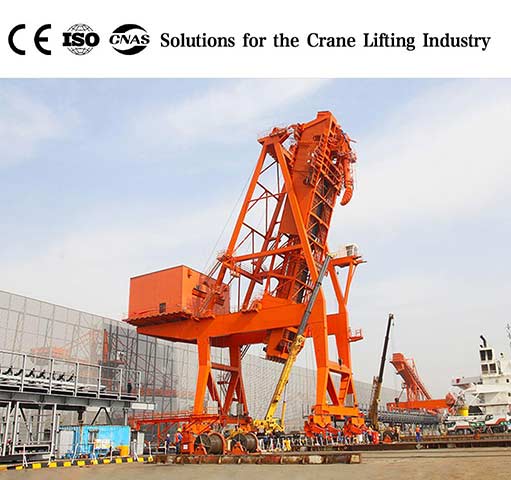
Our rail-mounted ship loaders include a tripper car supplying material to be conveyed which is generally located either between the rails or beyond the landside running rail of the ship loader. Depending on specific customer and/or environmental requirements, we are able to shield the tripper car and pier conveyor belt from the external environment with an enclosed pier bridge.
Rotating or swiveling functionality
For applications in which vessels are loaded on a finger pier with double-sided berthing, we are able to equip our ship loaders with a rotating or swiveling function. In this instance, the tripper car and pier conveyor belt are located between the rails of the ship loader, with the advantage that the ship loader and tripper car can all run on one rail. For piers with unilateral berthing and vessels with predominantly upright loading hatches, a non-rotating ship loader with a shuttle boom is employed. In this instance, the tripper car is installed on a separate pier bridge beyond the landside running rail of the ship loader and runs on independent rails.
Fixed or stationary solutions
Fixed ship loaders are generally employed in instances where environmentally hazardous material is to be loaded. A significant advantage of these machines is the excellent encapsulation of the feed route so that there is virtually no release of material into the environment – together with protection of the feed material from the elements. The drawback of these machines is that, in many instances, the vessel must be moved, either forward or back, for the purposes of loading into a different hatch.
Technical Data
| Ship Loader-------------------------------------Technical Specification | ||||
|---|---|---|---|---|
| Items | MS30 | MS100 | MS180 | Unit |
| Rate productive capacity | 300 | 1000 | 1800 | t/h |
| Limit capacity | 360 | 1200 | 2000 | t/h |
| Bulk cargo | Coke | Bulk cement | Coal | |
| Ship size | 5000 | 5000 | 5000 | DWT |
| Width of belt conveyor | 1000 | 1400 | 1400 | mm |
| Speed of belt conveyor | 2.5 | 2.42 | 3.5 | m/s |
| Chute extending length | 8.15 | 19.5 | 19.5 | m |
| Chute extending length speed | 9.3 | 4 | 3.6 | m/min |
Purchasing Process

FAQs About Choosing the Right Gantry Crane and Supplier
In order to obtain accurate quotes for custom overhead cranes, providing the following core information will greatly improve efficiency:
1. Key specifications: including rated lifting weight (tons), span (i.e., track spacing, meters), and lifting height (meters), which is the basis of the design.
2. Use environment and working conditions: Explain the conditions of the installation site (such as indoor/outdoor, temperature, humidity) and work level (busy level), which determines the material selection and configuration level of the structure.
3. Specific configuration requirements: clarify the drive mode (such as frequency conversion control), brand preferences for electrical components, safety devices (such as overload limiters, anti-collision systems), and whether special functions such as remote control are required.
4. Installation and service: confirm the on-site power supply conditions (voltage, frequency), installation conditions, and specific expectations for delivery time, installation and commissioning, and after-sales service.
The more detailed the information provided, the more accurate and reliable the solutions and quotations obtained.
1. Span and lifting capacity: this is the foundation.The larger the span and the higher the rated lifting weight, the material and design costs of the main beam and structure will increase significantly, and the higher the price.
2. Working level and frequency of use: The working level (A1-A8) represents the busy level and load status of the crane.Cranes with frequent and heavy-duty use require more durable motors, gearboxes and structural parts, and the cost is naturally higher than that of lightweight and occasionally used equipment.
3. Structure and configuration: The double beam is more complex and stable than the single beam structure, and the price is higher.At the same time, the lifting height, operating speed, motor brand, control system (ordinary vs frequency conversion), and the level of safety devices (such as anti-swing, load monitoring) all directly affect the final quotation.
4. Degree of customization and brand service: completely standard models have lower costs.The customized design based on the workshop environment (such as explosion-proof and high temperature), special processes (such as metallurgical special), brand added value, and after-sales guarantee system will all be reflected in the price.
In simple terms, when buying a bridge crane, it is necessary to consider “how much, how frequently, what environment and what configuration”, which determine its core value and price.
Which crane to choose mainly depends on your specific needs. You can quickly judge from the following four core aspects:
-Single-beam bridge crane: it is suitable for conventional workshops with light and medium loads (usually ≤20 tons), medium span, and low frequency of use. It is the most economical and versatile choice.
-Double-girder bridge crane: used for heavy-duty, long-span, or high-work-level occasions (such as frequent hoisting, metallurgy, heavy-duty assembly). Its stability, durability, and safety are higher, but the cost is also increased accordingly.
-Free vertical crane (cantilever/column type): suitable for fixed working points and working conditions with limited rotation range, such as beside machine tools, maintenance areas, or production line stations, it can efficiently use corner space and be installed flexibly.
-Grab crane: It is specially used for the handling, loading, and unloading of bulk materials (such as grain, coal, sand, and gravel). The only reason to choose it is that you need to deal with such unpackaged loose materials.
In simple terms, you can filter according to this logic:
First, according to the lifting weight and span, choose between a single beam and a double beam.
If the scope of operation is highly concentrated and the space is limited, consider a free vertical.
If the handling object is bulk material, it points directly to the grab type.
Yes. Our bridge cranes fully comply with and follow relevant international standards. Our company has passed a number of international certifications, such as the ISO 9001 quality management system, which guarantees that the management system ensures every aspect of the product, from design to delivery, is under high standards of quality control. Therefore, you can rest assured that our cranes are internationally competitive in terms of safety and quality.
In order to ensure the versatility, safety, and reliability of our products on a global scale, we strictly follow the mainstream international standard systems, including the International Electrotechnical Commission (IEC), European (EN/DIN), and the United States (ANSI/ASME) in the design and manufacturing process. For example, for the EU market, our products meet the detailed requirements of the Machinery Directive and CE certification. At the same time, we also actively adapt to specific regulations in other regions to meet the compliance needs of different customers.
Delivery times largely depend on whether the crane is standard or customized. Based on our experience, standard single-girder and double-girder cranes can be produced more quickly, while cranes with special spans, duty ratings, or environmental requirements naturally require additional engineering design time.
For each quotation, we provide an estimated production and delivery schedule based on your configuration and destination. Throughout the manufacturing process, our team maintains communication with the customer to ensure no unexpected issues arise before shipment.
Compared with many suppliers, Yangyumech mainly reflects the two differentiated advantages of high customization flexibility and clear international compliance when providing bridge cranes.
On the one hand, we focus on in-depth customized services. According to your specific needs, we can provide fully customized solutions on core parameters such as rated load capacity, span, and lifting height, and accept personalized requirements. This means that what you get is not a standard product, but exclusive equipment that accurately matches the working conditions of your workshop.
On the other hand, we attach importance to international standards and quality certification. Our products clearly meet the requirements of international certifications such as CE, which ensures that their safety and reliability can meet the mainstream standards of the international market, and provides you with additional quality confidence guarantees. Combined with our direct supply capabilities as a powerful factory, we can achieve better comprehensive value for you while obtaining compliant and customized products.
Hot Products
Single Girder Gantry Crane
- Capacity: 0.3t-36t; Span length: 4-35m
- Lifting height: 6m, 9m, 12m, etc.
- Raged voltage: 220V~690V
- Lifting height: 6m, 9m, 12m, etc.
- Raged voltage: 220V~690V
LD Single Beam Bridge Crane
- Single welding box girder
- Lifting Height: 5-50m
- Capacity: 1t-40t
- Lifting Height: 5-50m
- Capacity: 1t-40t
European Standard Electric Hoist
- Capacity: 1t-12.5t
- Working Class(FEM): 1Am-4m
- Lifting Height (m): 6/9 12/18
- Working Class(FEM): 1Am-4m
- Lifting Height (m): 6/9 12/18
Get In Touch
Yangyumech is a leading professional manufacturer of cranes in China. Our company integrates the processes of crane research and development, manufacturing, sales and service.