
Container terminals live and die on moves per hour. Every extra minute a box sits waiting costs money, and yard equipment is where most of that time is won or lost. Automated RMG gantry cranes have become the quiet workhorse behind the fastest terminals in the world, and it’s worth understanding why.
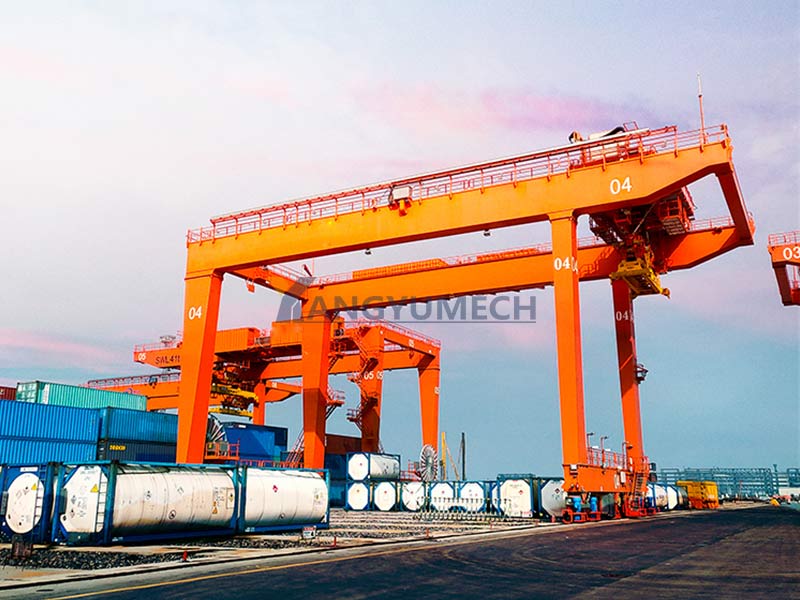
What Makes an RMG “Automated”?
A standard rail mounted gantry crane already runs on fixed rails, which gives it a stable, repeatable path. Automation takes that predictability and builds on it.
Remote Control First, Then Full Automation
Most terminals step up gradually. The first stage is remote operation, where the driver sits in a control room and moves the RMG gantry crane through cameras and screens. The next stage removes the human from the cycle entirely—the crane receives a job from the terminal operating system (TOS), travels to the slot, picks or places the container, and reports back with no operator input.
The Technology Behind It
Full automation depends on a stack of systems working together: precise positioning sensors on the rails and trolley, anti-sway control to kill load swing, OCR cameras to read container numbers, and a TOS that sequences every move. When these line up, the crane stops waiting on people and starts working like a machine on a schedule.
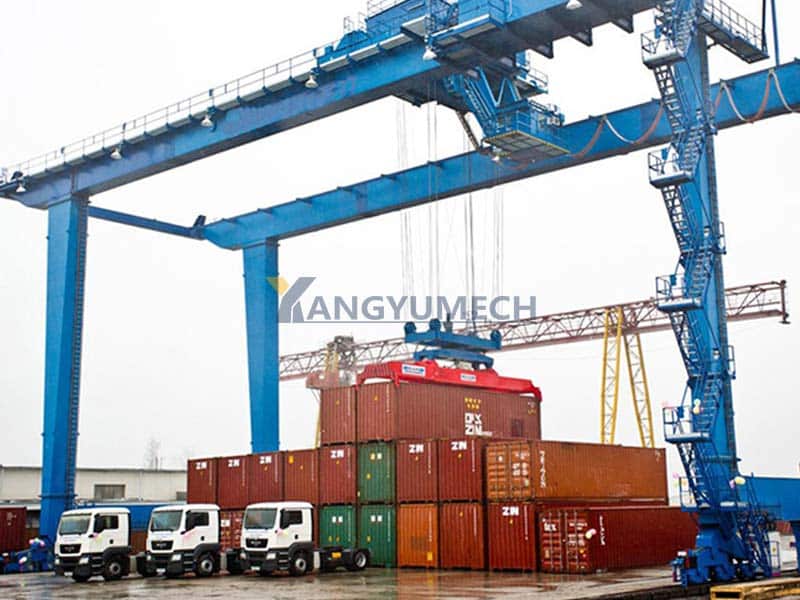
How Automation Actually Raises Throughput
Throughput isn’t one big leap. It’s a pile of small gains that add up over a shift.
Fewer Stops, Faster Cycles
A human operator pauses to judge, adjust, and settle the load. An automated RMG double girder gantry crane executes the same move with tighter tolerances and no hesitation, so each cycle is shorter and far more consistent. Repeat that thousands of times a day and the numbers move.
Higher Stacking Density
Automation allows tighter stacking because the crane can place boxes with millimeter-level accuracy. More containers per square meter of yard means you handle more volume without buying more land—often the single biggest cost a terminal faces.
24/7 Output Without Fatigue
People slow down at hour ten. Machines don’t. Automated rail mounted gantry cranes hold the same cycle time through the night shift, which is where a lot of hidden capacity sits unused in manual yards.
Less Rehandling and Fewer Mistakes
Misplaced boxes force rehandling, and rehandling is pure waste. An automated RMG gantry crane tracks every slot through the TOS, so the right box goes to the right place the first time. Fewer errors, fewer restacks, more real moves per hour.
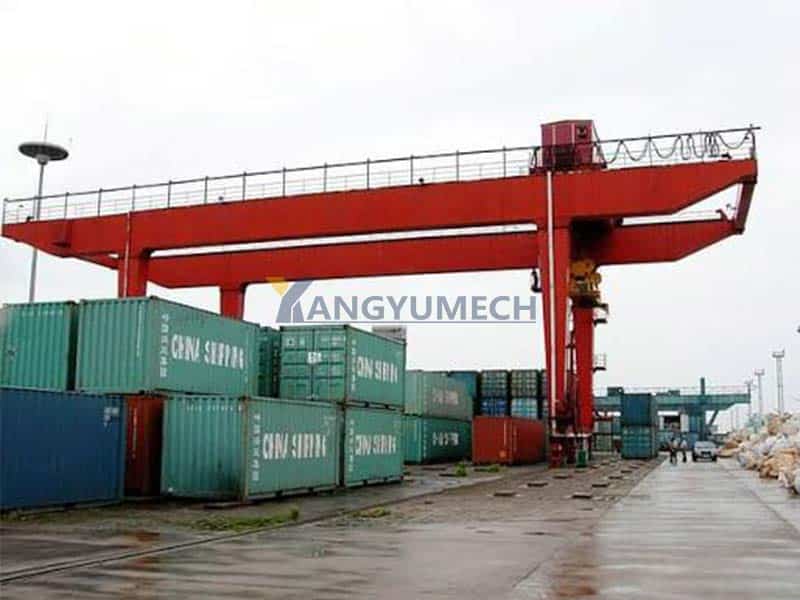
RMG vs RTG: Why Rails Suit Automation
RTG cranes offer flexibility because they can drive anywhere, but that same freedom makes precise automation harder—tire pressure, ground conditions, and steering all introduce variation. A rail mounted gantry crane runs on a fixed, measurable path, so sensors and control systems get a clean baseline to work from. That’s why most fully automated yards choose rails, and why automated RMG gantry cranes lead the field for high-density terminals.
What to Look for in an Automated RMG Supplier
Automation is only as good as the machine underneath it. Check that the structure is built for the duty class, that positioning and anti-sway are matched to your TOS, and that the supplier can support the control system long term. Spares and service matter even more on an automated crane, because downtime stops the whole block, not just one move. That’s the standard Yangyumech builds to: spares and controls support come as part of the package, not an add-on.
Yangyumech RMG Gantry Crane Services and Price Advantages
Yangyumech builds rail mounted gantry cranes and automated RMG gantry cranes for container yards and industrial terminals, engineered to your span, stacking height, and duty cycle. We also manufacture RTG cranes, single and double girder gantry cranes, overhead cranes, and electric hoists, so a terminal can source its full handling line from one manufacturer.
Our price advantage is structural, not a discount trick. Yangyumech builds in-house, supplies the structure, hoist, and controls as one package, and ships with CE and ISO documentation plus a documented load test. That removes the markup you pay when several suppliers touch the same project, and it keeps spares and support in one place. For terminals comparing RMG gantry crane price against lifetime cost, that combination usually wins.