
Ask three suppliers how much an overhead crane costs and you’ll get three very different numbers. That’s not because one is cheating you—it’s because an overhead crane is a custom machine, and the price swings with capacity, span, duty, and where it has to fit.
What Drives Overhead Crane Cost
Every quote you receive is built from the same handful of variables. Understand them and you can read an overhead crane price list like an engineer.
Capacity and Span
Capacity is the obvious one: a 5 ton overhead crane costs far less than a 50 ton unit. Span matters just as much and often gets overlooked. A wider span forces a heavier girder, and that extra steel shows up in the price faster than most buyers expect. A 10 ton bridge crane over a 10-meter span and the same crane over 25 meters are effectively different machines.
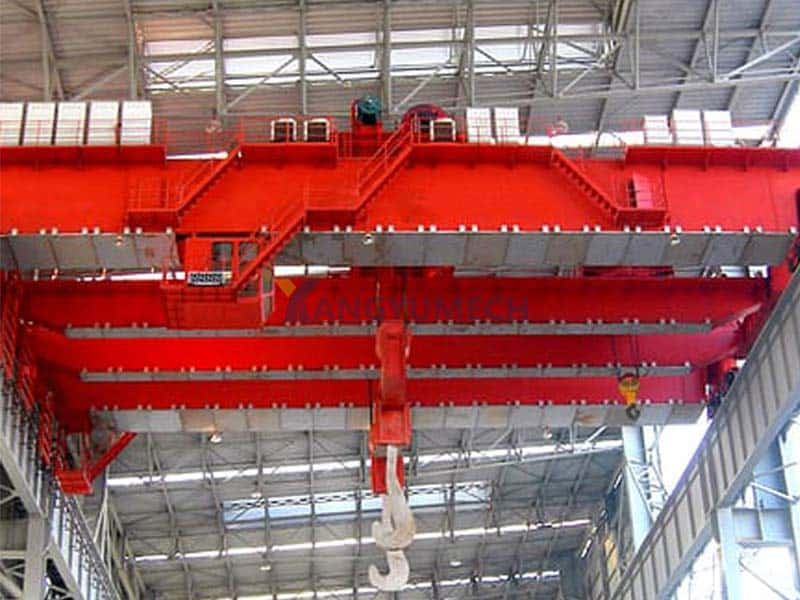
Girder Type: Single vs Double
A single girder overhead crane is the budget-friendly choice for lighter duty and shorter spans. A double girder bridge crane doubles the structure, adds height, and costs noticeably more—but it buys you higher lift, better hook approach, and longer service life under hard use. Choose single girder when it fits; step up to double only when the work demands it.
Hoist and Controls
The hoist can be 20–30% of the total. A standard wire rope hoist is cheaper than a European style low-headroom unit, but the euro design often saves money over time through lighter weight and lower power draw. Controls range from a simple pendant to radio remote or a full cabin. Each step adds cost, so spec what the operator actually needs.
Installation and Site Work
Don’t forget the parts that aren’t in the catalogue. Runway beams, columns, foundation work, electrical supply, and erection labor can add a significant chunk. A crane that looks cheap on paper gets expensive fast if your building needs structural reinforcement.
Typical Overhead Crane Price Ranges
These are rough ballparks for budgeting, not firm quotes. A standard single girder overhead crane in the small range—1 to 5 tons—often lands in the low five figures in USD equivalent. A 10 ton overhead crane with a mid-length span and standard hoist moves into a higher bracket. Once you pass 20 tons, or need double girder construction, long spans, or special duty, the overhead crane cost climbs steeply and the design work becomes the dominant factor. Outdoor or explosion-proof versions add more again. And remember: a bridge crane price you find online usually quotes the machine alone—it rarely includes delivery, installation, or commissioning. Always price the delivered, installed machine, not just the ex-works unit. Yangyumech quotes the delivered and installed price up front, so you can compare offers like for like.
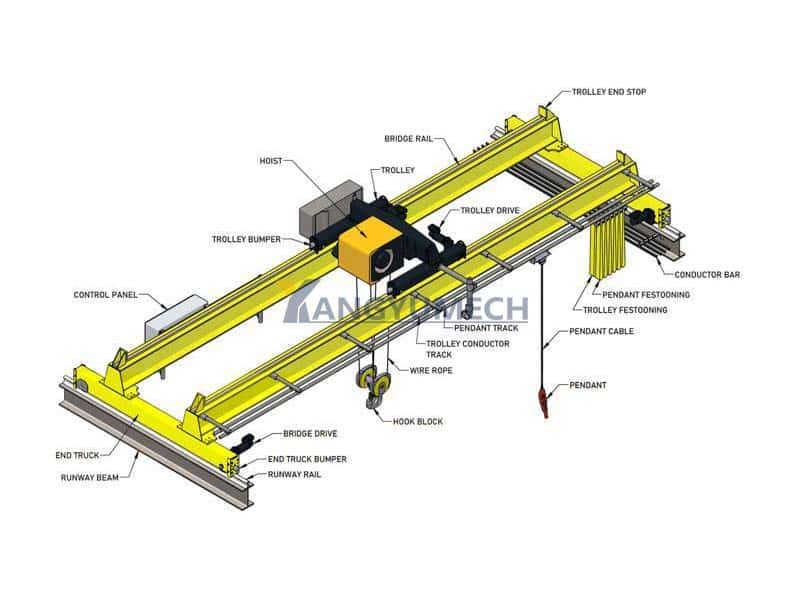
How to Choose the Right Overhead Crane
Cost only tells half the story. The right choice is the cheapest overhead crane that safely does the job for its full service life.
Match Capacity to the Worst Case
Size for your heaviest load plus rigging, not your daily average. Running a crane near its limit shortens its life and drives up maintenance cost.
Think About Duty Class
A crane lifting a few times an hour is a different animal from one working a production line all shift. Duty class affects motor size, brake rating, and structure—and it’s the most common place buyers under-spec and regret it.
Check the Building First
Span, hook height, and runway capacity are set by the building, not the catalogue. Measure before you buy. If headroom is tight, a low-headroom hoist or a different girder type can save you from rebuilding the roof.
Weigh After-Sales, Not Just Sticker Price
Spares availability, response time, and warranty terms affect lifetime cost more than a few percent off the purchase price. A cheaper crane with no local support gets expensive the first time it breaks down.
Yangyumech Overhead Crane Services and Price Advantages
Yangyumech is a crane manufacturer, not a middleman, and that shows up directly in your price. We build single girder overhead cranes, double girder bridge cranes, gantry cranes, and electric hoists in our own facilities, so you pay factory cost instead of distributor markup. Every unit is engineered to your capacity, span, and duty class, then delivered with CE and ISO documentation and a documented load test.
Our price advantage comes from scale and vertical integration, not from cutting corners. Yangyumech supplies the hoist, the structure, and the controls as one package, which removes the margin stacking you get when three suppliers touch the same project. We also keep a full range of spares and offer installation guidance and after-sales support, so the low upfront price doesn’t turn into a high lifetime cost.