
No two container yards work the same way. One terminal handles 20-foot boxes all day and needs a fast single-lift cycle. Another runs mixed 40-foot and 45-foot containers, stacks six high, and works a narrow aisle between buildings. A third operates in coastal humidity where corrosion eats steel faster than anywhere else. A stock rubber tired gantry crane cannot serve all three well — so we build to the job instead.
What We Ask Before We Design?
We want the container mix, because a 40-foot RTG crane spreader that also handles 20-foot boxes needs a different frame and locking arrangement than a dedicated single-size unit. We want the stacking plan — how high, how many rows, and whether you need to pass over a truck lane. We want the ground conditions, because a rubber tired gantry crane distributes load across eight or sixteen wheels, and the wheel loading calculation depends entirely on the pavement you actually have.
We also ask about power. Diesel-electric is the proven standard. Busbar and cable-reel electric RTG crane configurations cut fuel cost and emissions, and they make sense in terminals near residential areas or inside enclosed yards. Hybrid units fit operators who want diesel range with lower consumption.
Then we ask about the operator. Manual cab, RTG crane remote control from a ground station, or a fully automated RTG with position detection — each changes the electrical architecture, the sensors, and the safety interlocks. Getting this wrong is expensive to correct later.
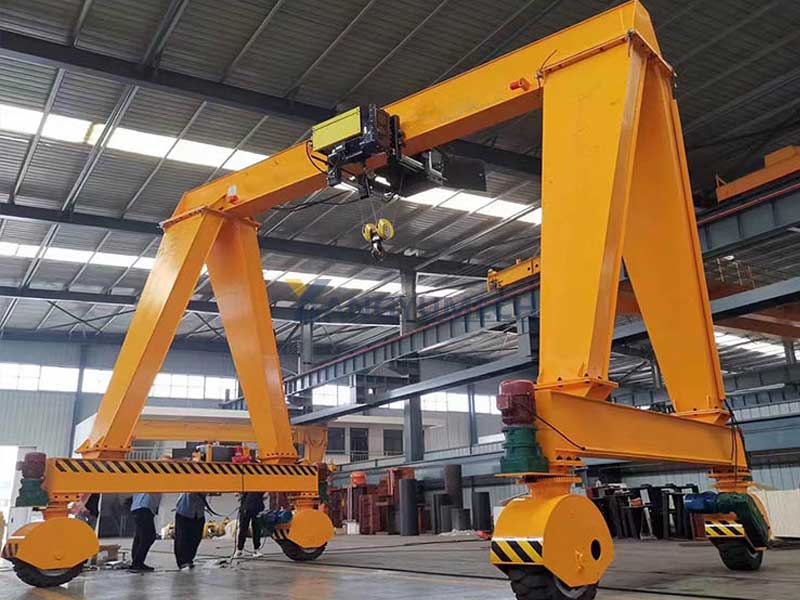
How RTG Cranes Solve Industry-Specific Handling Problems?
The rubber tired gantry crane earns its place because it travels. Fixed rail cranes are locked to one path; a rubber tired gantry crane steers between blocks, crosses yard roads, and repositions as the operation grows. That flexibility solves problems that show up in specific industries, and it is why RTG crane container handling remains the backbone of yard operations worldwide.
Ports and container terminal operators use RTG cranes — the workhorse container terminal crane — to stack and reshuffle containers between vessel discharge and truck pickup. The crane must handle peak surges when a ship is being worked and stay idle-clean when it is not. Steering systems that follow embedded transponders or painted lines keep the machine aligned within a few millimeters while traveling at speed — a requirement you cannot meet with a human eye alone.
Rail intermodal yards face a different problem: mixed freight arriving on flatcars, freight that must be sorted and stacked against a departure schedule. The crane has to work a long, narrow strip between rail tracks, which drives the decision on span and on the number of truck lanes underneath.
Precast concrete and steel yards use heavy-lift port gantry crane designs to handle molds, beams, and coils. Here the constraint is not container size but load shape. Custom hook blocks, rotating spreaders, and extended lifting height matter more than the container-handling features a terminal needs.
Cold storage and food logistics operations work in low temperatures and high humidity. Custom units for these yards get heated cabs, sealed electrical enclosures, anti-corrosion coatings, and cold-rated hydraulic fluids.
Key Considerations When Choosing a Rubber-Tired Gantry Crane
RTG crane lifting capacity sets the frame. A standard unit lifts 40 tons under a spreader, which covers a loaded container plus spreader weight. If you also want to handle heavier cargo with a hook, the frame, rope, and brake must be specified for the greater load from the start.
RTG crane stacking height and width define the dimensions. Six-plus-one and five-plus-one are the common configurations, but the number of rows the crane spans and whether it accommodates a truck lane underneath change the portal frame significantly. These are the first entries on every rubber tired gantry crane specifications sheet we issue.
Wheel loading is the constraint that surprises buyers. The crane spreads a heavy load across many wheels, but the pavement still has to take it. If your existing yard was built for a lighter machine, the custom scope may include a wheel-loading study and recommendations for pavement thickness.
Automation level deserves honest thought. Full automation reduces labor cost and improves cycle consistency on repetitive container moves, but it requires a stable yard layout, reliable position references, and an operator team that can maintain the electronics. A remote-controlled machine often delivers most of the safety benefit at a fraction of the complexity.
Serviceability decides long-term cost. Rubber tired gantry crane maintenance eats budget when components are hard to reach or when spare parts take weeks to arrive. We lay out the machine so the engine, brake units, and rope drums are accessible, and we document every replaceable part.
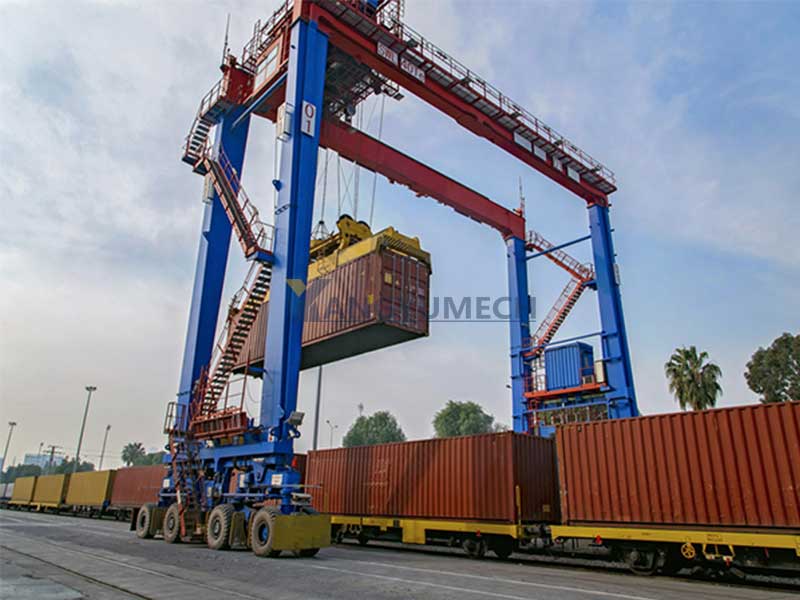
Yangyumech Custom Rubber-Tired Gantry Crane Solutions
Yangyumech is a rubber tired gantry crane manufacturer building custom machines for container terminals, rail intermodal yards, precast yards, and heavy cargo operations. Our standard platforms cover 30 to 45 tons under spreader, stacking up to six-plus-one high and spanning up to seven rows plus a truck lane, in diesel-electric, hybrid, busbar electric, and cable-reel configurations. Every custom RTG crane can be adapted — spreader type, portal dimensions, wheel loading, cab position, control mode, and coating system.
The gantry crane customization process starts with your yard data and ends with a drawing set you approve before fabrication. We issue the structural calculations, wheel loading report, electrical schematic, and load test procedure. Every Yangyumech rubber tired gantry crane is load-tested to 125 percent of rated capacity before shipment and delivered with a full documentation package.
For buyers who need to compare options before committing, we provide a rubber tired gantry crane cost breakdown by configuration, so the trade-offs between automation level, power source, and stacking height are clear. We also quote exact specifications on request — tell us your container mix, stacking plan, ground conditions, and target duty cycle, and we will design the machine around them.
If you are evaluating a rubber tired gantry crane for sale and your operation does not fit a catalogue model, that is exactly the case Yangyumech builds for.