
A scissor lift platform raises workers and materials vertically using a crisscrossed set of steel arms. The arms fold flat when lowered and extend upward as hydraulic pressure or an electric screw drive pushes them apart. The result is a stable, level working surface at heights from 4 to 18 meters — without scaffolding, ladders, or permanent installation.
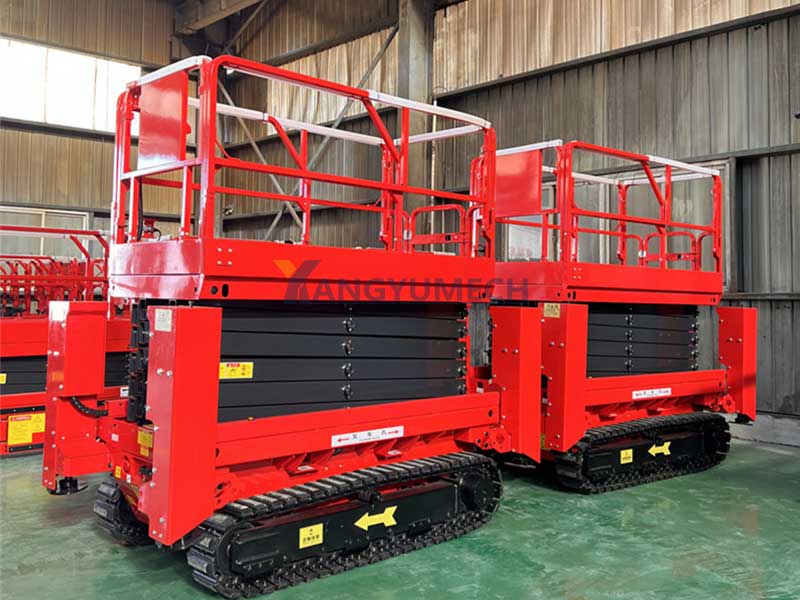
Scissor Lift Platform Basic Operation: Step by Step
Before anything else, inspect the machine. Walk around the platform and check for hydraulic leaks, damaged hoses, loose pins, and tire wear. Confirm the battery is charged or the fuel tank is full. Check the emergency stop button — it must pop back freely when twisted and released.
Position the scissor lift on firm, level ground. Most models have outriggers or stabilizer legs that must be deployed before raising the platform. Extend them until the pads press firmly into the ground and the chassis is level according to the built-in bubble indicator. If the surface slopes more than 1.5 degrees, reposition — do not try to compensate with the stabilizers.
Climb onto the platform through the entry gate. Close the gate. Attach your safety harness to the designated anchor point. Press and hold the “up” button. The platform rises smoothly — hydraulic scissor lift platforms accelerate gradually, while electric screw-drive units offer more precise positioning. Stop at the desired scissor lift platform height by releasing the button.
To move horizontally, some models allow drive-while-elevated operation within a restricted range. Check the manufacturer’s manual — driving at full height is prohibited on most units. Always keep both hands on the controls and maintain a clear line of sight in the travel direction.
To lower, press the “down” button. The descent is gravity-fed, regulated by a flow control valve. If power fails, the emergency lowering valve releases hydraulic pressure and brings the platform down at a safe speed. Every operator should locate and test this valve during the pre-use inspection — it is one of the most critical scissor lift safety features.
Scissor Lift Platform Applications
Scissor lift platform applications span construction, maintenance, warehousing, and events. On construction sites, workers use them for ceiling installation, drywall, electrical conduit routing, and painting. Warehouses and distribution centers deploy electric scissor lift platform models for high-rack stock picking, light fixture maintenance, and inventory counting at upper levels.
Facility maintenance teams rely on scissor lifts for HVAC ductwork, pipe installation, and overhead door servicing. Industrial plants use them for machinery inspection at height. Event and stage crews use them for rigging lights, hanging signage, and set construction.
An indoor scissor lift prioritizes quiet operation, zero emissions, and non-marking tires for finished floors. An outdoor scissor lift — typically a rough terrain scissor lift with four-wheel drive and high-clearance chassis — handles uneven ground on construction sites and outdoor maintenance projects.
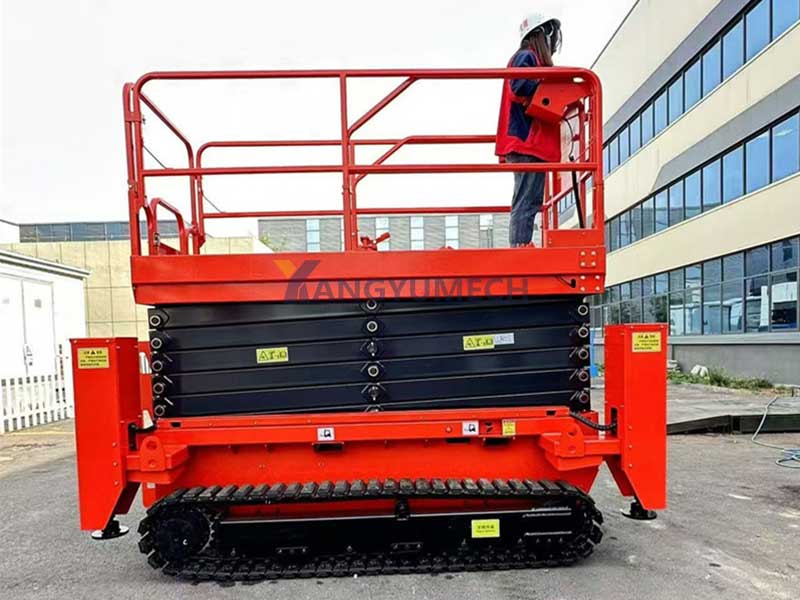
Scissor Lift Platform Cost and Buying Guide
Scissor lift platform cost varies by height, capacity, and power type. A 6-meter electric scissor lift for indoor use typically runs $8,000 to $15,000. A 10-meter model with larger platform and higher scissor lift platform capacity (450 to 700 kg) ranges from $15,000 to $25,000. Rough terrain diesel scissor lifts at 12 to 14 meters cost $25,000 to $40,000. Heavy-duty 18-meter models can exceed $50,000.
This scissor lift platform buying guide comes down to four questions.
First, what scissor lift working height do you need? Working height equals platform height plus 2 meters for a person standing.
Second, what capacity? Divide the rated scissor lift platform capacity by the number of workers plus tools and materials — 230 kg for one person with light tools, 450 kg for two workers, 700 kg for two workers with heavier gear.
Third, what power source? Electric scissor lift platform models are quiet, clean, and ideal for indoor use but need charging infrastructure. Diesel units deliver more power and run longer outdoors but produce emissions and noise. Fourth, what scissor lift platform safety features are included? Look for tilt sensors that disable elevation on slopes, pothole protection bars, platform overload sensors, and emergency lowering.
Why Yangyumech
Yangyumech is a scissor lift platform manufacturer building units from 4 to 18 meters, with platform capacities from 230 to 700 kg, in electric, diesel, and dual-power configurations. The product line includes indoor electric models with non-marking tires and quiet hydraulic drives, and outdoor rough terrain models with four-wheel drive, high ground clearance, and diesel power.
Every Yangyumech scissor lift platform is built to CE and ANSI standards, factory-tested for structural integrity and hydraulic safety, and shipped with complete documentation — load test certificate, operation manual, electrical schematic, and spare parts list. Safety features include tilt sensors, automatic pothole protection, platform overload alarms, emergency lowering valves, and safety harness anchor points.
The Yangyumech engineering team helps buyers select the right height, capacity, power type, and tire configuration. Custom platform sizes, extended decks, and specialized control options are available. Yangyumech handles export logistics, customs documentation, and on-site commissioning.