
In modern manufacturing workshops, cranes have long surpassed the role of simple “lifting tools”. It is more like the aorta of the production process. The rationality of its selection and configuration is directly related to production beat, logistics efficiency, equipment safety, and even the final product cost. Facing a wide range of crane types on the market, especially the most basic and core single-beam and double-beam bridge cranes, how can manufacturing companies make informed choices?
Analysis Of Types Of Cranes Commonly Used In The Manufacturing Industry
The manufacturing scene is complex and diverse, so it has spawned crane types that adapt to different needs. Understanding their characteristics is the first step in the correct selection.
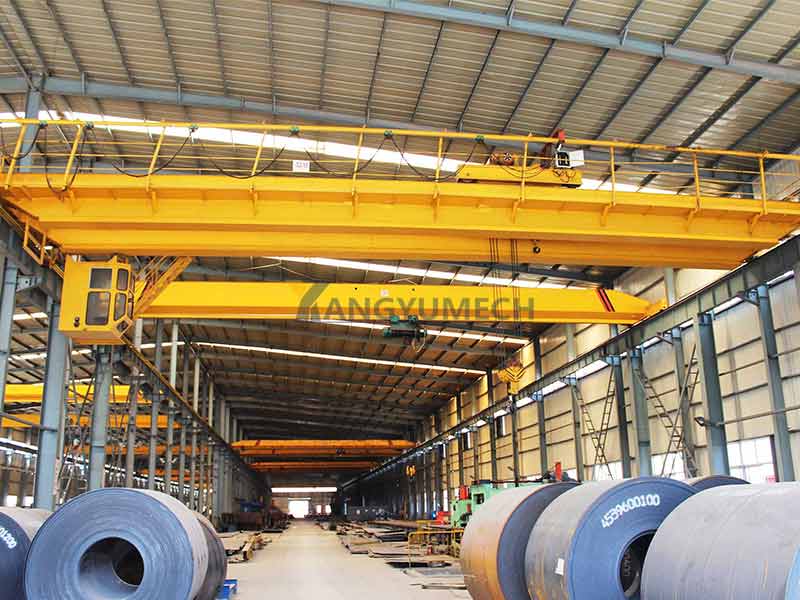
Bridge crane: This is the most widely used “main force” in the manufacturing industry, especially in indoor workshops. It spans the rail beams on both sides of the workshop, like a movable “bridge”, which can make full use of the upper space of the workshop and realize the full coverage of the work area for lifting. According to the main beam structure, it is further divided into single-beam bridge crane and double-beam bridge crane, which is also the most common choice faced in the selection of the manufacturing industry.
Gantry crane: Figuratively speaking, it is a “bridge crane” with legs. Its huge door-shaped frame can run along the ground track, especially suitable for loading, unloading, and handling of heavy materials in open-air cargo yards, open-air assembly sites, or areas with particularly large plant spans.
Cantilever cranes: including column-mounted, wall-mounted, and balance cranes. They are like flexible “robotic arms”, providing a limited but extremely accurate circular or linear working range. It is very suitable for high-frequency and small-scale fixed-point hoisting operations in fixed stations of production lines, machine tool loading and unloading, or maintenance areas, which can significantly reduce the labor intensity of workers.
Core Choice: Single Beam Or Double Beam Crane?
For most manufacturing workshops, the core of the selection of bridge cranes often falls on the trade-off between “single beam” and “double beam”. This is not a simple price comparison, but an accurate matching of performance, cost, and working condition requirements.
Single-beam bridge cranes have a relatively simple structure, are lightweight, have low load-bearing requirements for the plant, and initial investment and maintenance costs are usually more advantageous. It is very suitable for light load, medium load (usually recommended below 20 tons), medium span, and not particularly frequent work (A3-A5 work level) occasions.
For example, in general machining workshops, assembly lines, and warehouses for the transfer of parts and semi-finished products, single-girder cranes are competent and cost-effective.
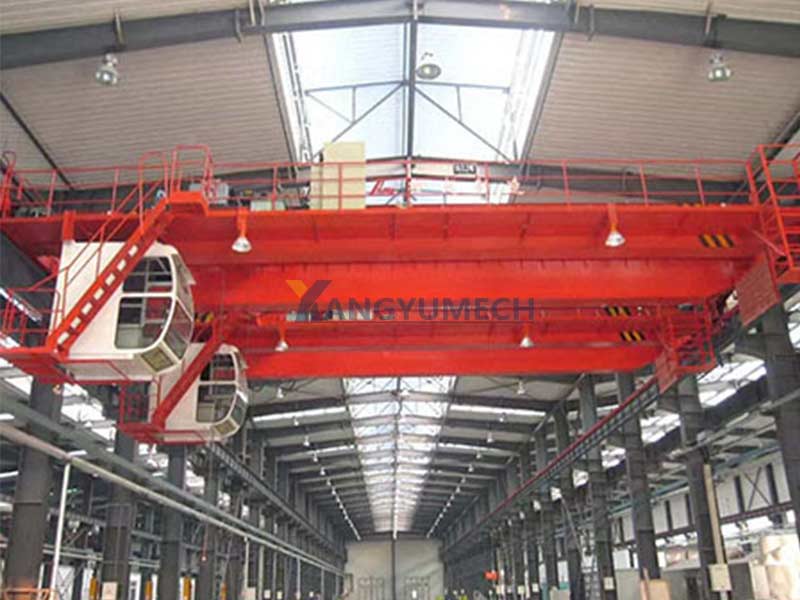
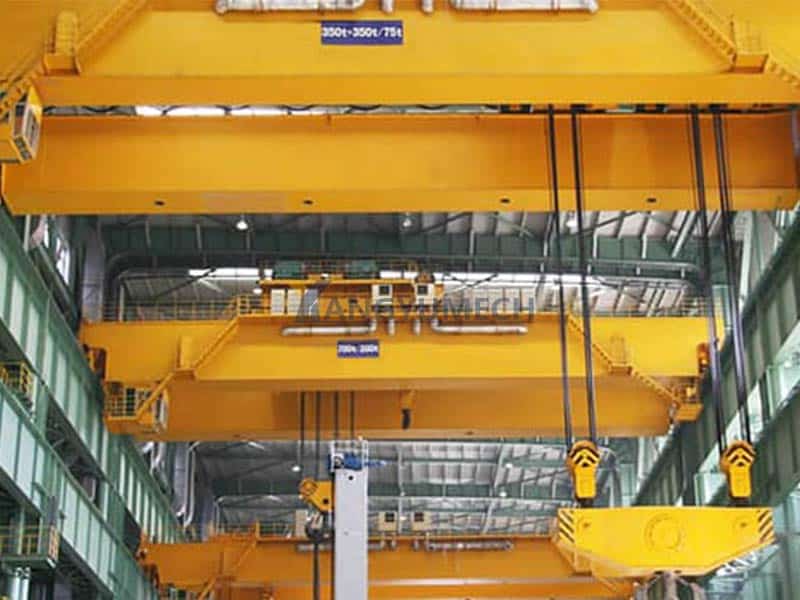
The double-girder bridge crane provides higher stability and carrying capacity with its sturdy box-shaped main beam structure. Its trolley runs on two main beams, which run more smoothly and have more accurate positioning. It is suitable for heavy loads, large tonnage (up to hundreds of tons), long spans, high working levels (A6 and above), and harsh working conditions that require more accurate lifting.
For example, in heavy machinery manufacturing, metallurgical casting, large-scale equipment assembly workshops, or scenarios where dangerous goods such as liquid metals are hoisted, the advantages of double-girder cranes in terms of safety, reliability, and service life are highlighted, and the comprehensive cost of the whole life cycle may be lower.
Key considerations for selection:
-Lifting weight and span: This is a hard indicator. Beyond the scope of the economic application of single beams, double beams must be selected.
-Busy work and accuracy requirements: high frequency, long-term continuous operation, or high requirements for smooth operation and positioning accuracy, double beams are a better choice.
-Plant conditions: It is necessary to verify the bearing capacity and clearance height of the plant column. The double beam has a larger weight and higher structural requirements, but sometimes its compact, low-headroom design can save valuable vertical space.
Yangyumech: Provide Cost-Effective Professional Solutions For The Manufacturing Industry
In the face of complex selection decisions, a supplier that not only provides products but also provides professional consulting and customized solutions is essential. Yangyumech crane manufacturers are well versed in the comprehensive pursuit of efficiency, reliability, and cost control for manufacturing customers.
Our core advantage is that we can “tailor” for you based on a deep understanding of your production process, workshop layout, and material characteristics. Whether it is to choose an economical and flexible single-beam solution or a rugged double-beam system, our engineering team can provide optimal configuration recommendations to avoid waste of excess or insufficient performance.
More importantly, through optimized supply chain management, large-scale production, and precise cost control, we can provide the market with superior product prices that are significantly better than the industry average. This is not at the expense of quality and safety. On the contrary, we insist on the use of first-line brands in the industry for key components to ensure the core reliability of the crane.
Our value lies in the fact that, through scientific design and efficient manufacturing, we can reduce the initial investment threshold for you under the same or even higher performance standards, so that every cent of your budget can get a real return.
Choosing Yangyumech means that you will get a reliable partner who is committed to cost-effective lifting solutions to effectively help manufacturing companies improve logistics efficiency, ensure operational safety, and optimize production costs. Let us help you build a smoother and more competitive production line.