
Ask anyone who runs a steel yard, a container terminal, or a precast plant, and they will tell you the same thing: you cannot run the place without a gantry crane. Unlike an overhead bridge crane, which hangs from the roof steel of a building, a gantry crane stands on its own legs and travels on rails or rubber tires across open ground. That one design difference explains why gantry cranes turn up almost everywhere heavy loads need to move — and why getting the size right matters before you order.
Industries That Rely on Gantry Cranes
Ports and Container Terminals
Container handling is where gantry cranes earn their keep. Rubber-tyred gantry cranes (RTGs) and rail-mounted gantry cranes (RMGs) do the daily work of stacking containers, loading trucks, and feeding rail cars. In a busy terminal, cycle speed and stacking density decide throughput, so operators push for anti-sway control, auto-steering, and electric drives that run around the clock.
Shipbuilding and Offshore Engineering
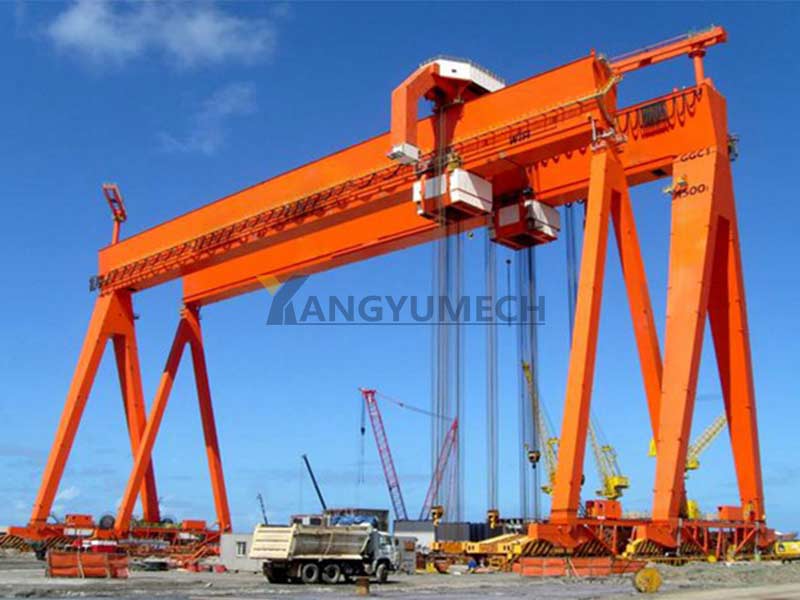
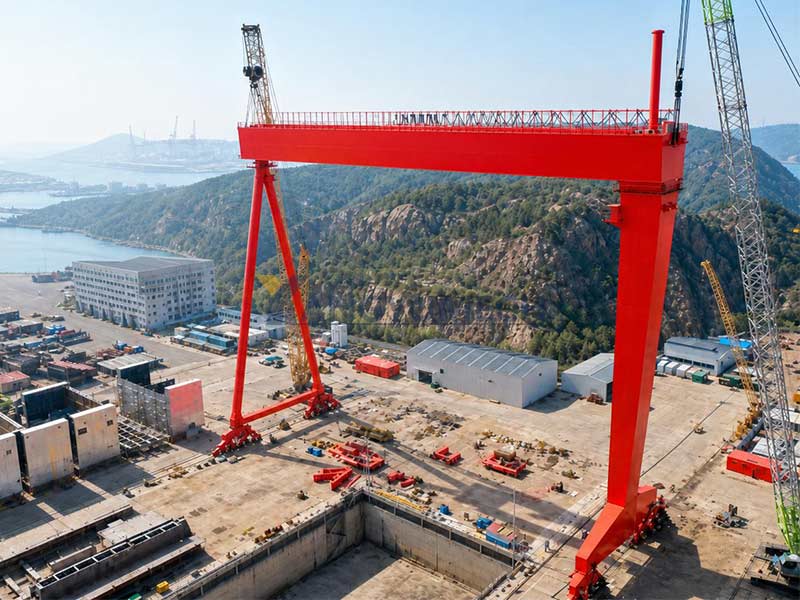
Shipyards build some of the largest gantry cranes in existence. Spans of 50 to 120 meters and capacities from 100 to 800 tons are normal — whole hull blocks and engine modules have to be lifted into position. Many of these machines carry two trolleys for tandem lifts, with precision positioning to support modular construction. Offshore wind and subsea yards use similar heavy portal cranes for tower sections and foundations.
Steel Mills and Metal Processing
Steel production is hard on equipment — heat, dust, and relentless duty cycles. Double-girder gantry cranes in the 20 to 60 ton range move coils, slabs, billets, and finished sections between the production line and outdoor storage. Most are fitted with magnets, C-hooks, or coil lifters, and the drives are protected for work near furnaces. Inside the mill building, an overhead bridge crane often takes over the same jobs, which is why steel plants commonly run both types side by side.
Precast Concrete and Heavy Construction
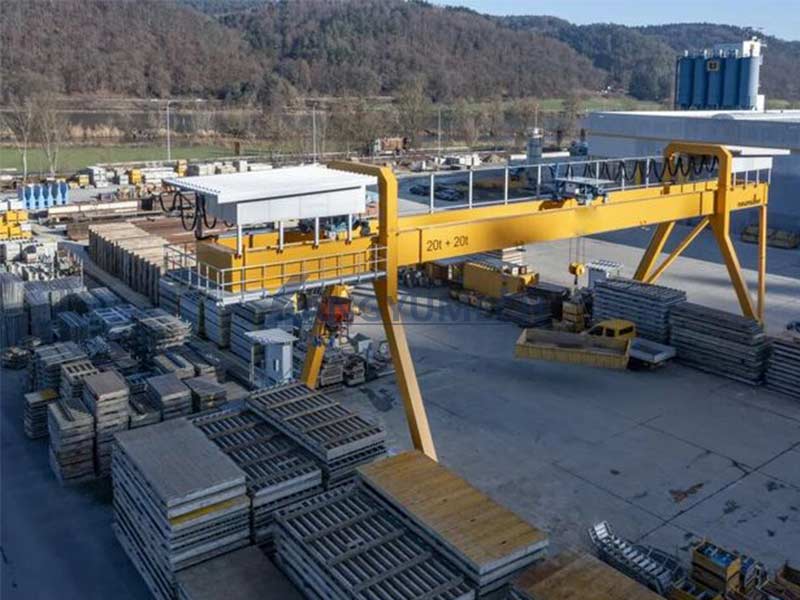
Precast yards use gantry cranes to lift bridge beams, tunnel segments, wall panels, and structural steel. Portable and rubber-tyred models are favorites here because they move from site to site without permanent rails. On highway and rail projects, launching gantries place precast girders over long spans, while standard gantries handle the yard work and truck loading.
Manufacturing Shops and Warehouses
Not every gantry crane is a giant. Small single-girder units and portable gantries are common in machine shops, repair bays, and warehouses, handling tooling changes, engine pulls, pallet loading, and assembly support. Capacities usually sit between 1 and 10 tons, with manual or electric chain hoists. These compact units give you overhead lifting without touching the building structure — a real advantage in rented facilities.
Energy and Power Plants
Power stations use gantry cranes to install and service generator rotors, turbine casings, transformers, and boiler drums. Dam sites and solar farms bring in outdoor gantries for construction, and wind assembly bases rely on them for blades, nacelles, and tower sections.
What Size Gantry Crane Do I Need?
Start with the Heaviest Load, Not the Average
The biggest mistake buyers make is sizing for the average load. Work out the heaviest single lift you will realistically handle, add the weight of the rigging — slings, shackles, spreader beams, magnets — then add a 20 to 30 percent margin for dynamic loading and future growth. If your number falls between two standard capacity classes, buy the larger one. The extra cost is small next to the cost of being undersized.
Span, Lifting Height, and Duty Class
Span is the distance between the rails, and it should match your actual work bay or storage row, not the widest point of the yard. Wider spans cost disproportionately more because bending forces grow faster than the distance. For lifting height, measure from the floor to the highest point a load must clear, then add room for the hook and rigging. Duty class matters as much as tonnage: a crane that runs three shifts at high frequency needs a heavier rating (FEM 2m or above), while a workshop crane used a few times a day can live on a lighter one. Dust, salt air, temperature extremes, and explosion hazards change the spec too.
Yangyumech — Custom Cranes Built Around Your Job
Off-the-shelf sizes rarely fit a real operation. Yangyumech designs and manufactures gantry cranes, overhead bridge cranes, jib cranes, KBK workstation systems, and electric hoists to match your site conditions. The range covers 1 to 800 tons — single girder and double girder gantry cranes, rubber-tyred RTG models, container handling gantries, and specialty portal cranes for shipyards, steel mills, ports, and manufacturing — all built to FEM, DIN, ISO, and CE standards with full factory testing.
We also produce the hoists that go with them: wire rope hoists and chain hoists from 0.25 to 40 tons, including European-standard models, heavy-duty industrial units, and explosion-proof versions. Every project includes engineering design, fabrication, export packing, on-site installation guidance, and technical support.
If you are sizing a new gantry crane or upgrading an existing line, send us your load data, span, and lifting height. Our application engineers will work out the right configuration for your industry and your budget.