
Two questions come up first whenever someone starts shopping for a gantry crane: how much can a gantry crane lift, and what size gantry crane do I need? Both are the right questions, and both depend on the job, not on a single number. A gantry crane is not a one-size product — it is a family of machines that ranges from a half-ton workshop unit you can push by hand to a 500-ton portal that serves a shipyard.
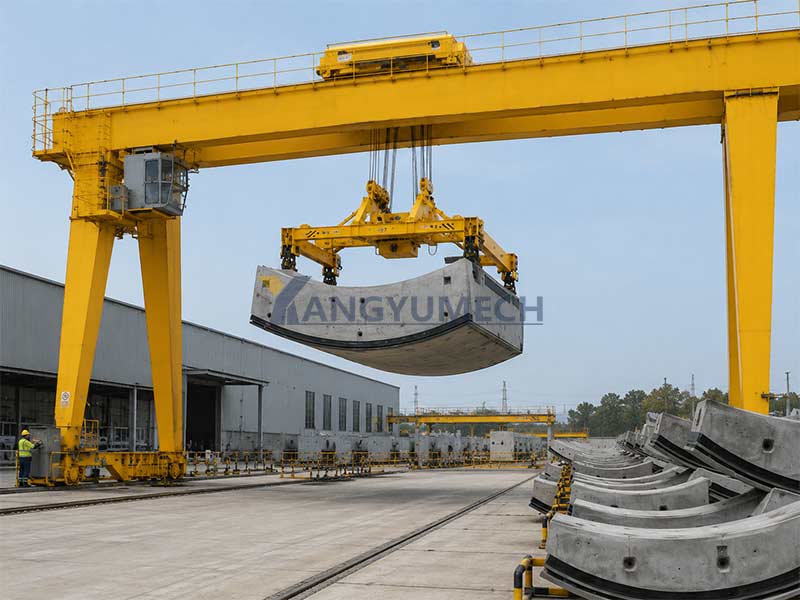
How Much Weight Can a Gantry Crane Lift?
The gantry crane lifting capacity is set by the structure, not by a switch. At the light end, a portable gantry crane handles 0.5 to 5 tons and is moved by hand or with a floor crane. These are common in maintenance bays and small machine shops where a permanent overhead crane is not worth the cost.
A standard single girder gantry crane covers roughly 1 to 20 tons. It uses one main beam, a lighter trolley, and an electric or manual hoist. This is the workhorse for workshops, warehouses, and precast yards that lift moderate loads frequently.
Above that, a double girder gantry crane takes over. Two beams give a stiffer bridge, allow a higher hook and a heavier trolley, and push gantry crane weight capacity up to 100, 200, even 500 tons in heavy fabrication, steel service centers, and shipbuilding. The trolley rides on top of the girders rather than hanging below, which adds headroom and load stability.
Specialized types sit at the extremes. A rubber tired gantry crane lifts about 40 tons under a container spreader for port and intermodal work. A rail mounted gantry crane can handle the same or more on fixed track. For very heavy project cargo — reactor vessels, bridge girders, turbine housings — custom gantry cranes are built to the specific tonnage and rarely share a catalogue with standard models.
What Size Gantry Crane Do You Need?
Gantry crane size is not just the footprint. Three dimensions decide it: span, height, and the ground it stands on.
Gantry crane span is the distance between the legs. A narrow 6-meter span suits a single workstation; a 40-meter span covers a full fabrication bay or a rail yard. Longer span means a deeper, heavier beam and usually a second hoist or a smarter trolley to keep deflection in check.
Gantry crane height means two things: the overall portal height and the hook lifting height under the beam. If you lift a 4-meter mold and need 1 meter of sling and 0.5 meters of clearance, your lifting height starts at 5.5 meters before you even account for the beam depth. Underspecify this and you cannot set the load down where you need it.
The ground decides the travel system. Smooth concrete takes a rail or a wheeled crane. Uneven outdoor yards take a rubber tired gantry crane with four-wheel drive. Soft or unpaved ground may need wider tyres or a reinforced foundation. This is where gantry crane specifications stop being theoretical and become civil engineering.
Choosing Between Types
Single girder versus double girder is the first fork. Pick single girder when capacity stays under 20 tons and headroom is not tight. Pick double girder when you need more than 20 tons, a higher hook, or a trolley with multiple motions.
Rail mounted gantry crane versus rubber tired comes down to mobility. Rail units are locked to a fixed path but can be very long and very heavy. Rubber tired units steer between blocks and cross yard roads, trading some capacity for flexibility.
For light, occasional lifts, a portable gantry crane on casters is the cheapest answer and stores out of the way when not in use.
Gantry Crane Selection Guide
A practical gantry crane selection guide starts with four numbers.
First, the maximum load you will actually lift — not the maximum you might lift someday.
Second, the span you need to cover.
Third, the lifting height from floor to hook at the highest point.
Fourth, the duty cycle: a few lifts a day needs a lighter class than a crane running a full shift.
Then match the type to those numbers. Write down the gantry crane specifications: capacity, span, lifting height, hoist type and speed, travel speed, rail or wheel type, and the electrical supply. A gantry crane manufacturer should confirm these against a structural and wheel-loading calculation before building.
Think about gantry crane applications as you spec. Warehousing needs speed and precision. Precast concrete needs a wide span and a rotating hook. Shipbuilding needs massive capacity and a long travelling length. The same crane rarely serves all three well.
If you are comparing a gantry crane for sale, do not shop on price per ton alone. A crane that is the wrong span or the wrong height costs more in lost time and modification than the saving on the invoice.
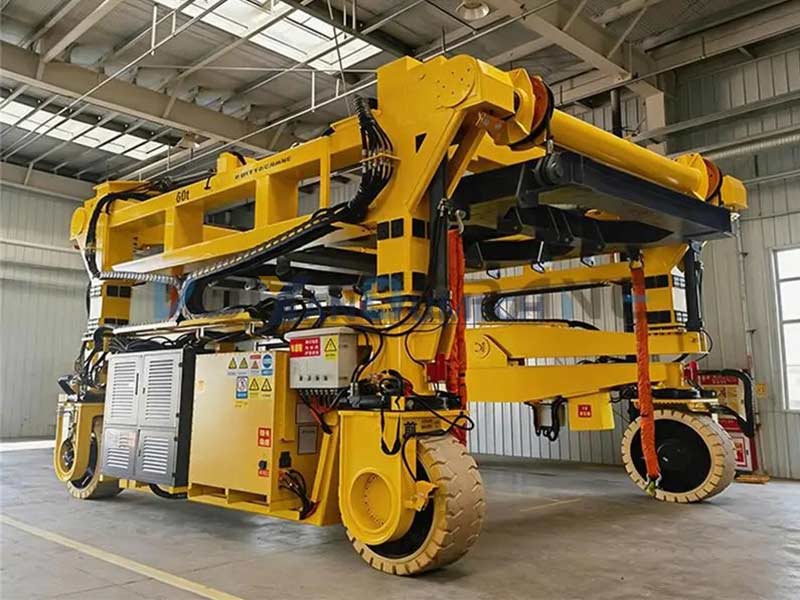
Why Yangyumech Custom Gantry Crane Solutions
Yangyumech is a gantry crane manufacturer building custom gantry cranes from 1 to 500 tons. The range covers portable units, single girder and double girder designs, rail mounted gantry crane and rubber tired gantry crane configurations, and heavy project cranes for shipbuilding and energy. Every crane is engineered to the buyer’s load, span, lifting height, duty cycle, and site conditions.
The engineering team issues structural calculations, wheel-loading reports, and a full specification sheet before fabrication. Yangyumech builds to FEM and ISO standards, load-tests each crane to 125 percent of rated gantry crane load capacity, and ships with inspection certificates, operation manuals, and spare parts lists.
For buyers who need a precise answer to how much a gantry crane can lift and what size fits the yard, Yangyumech starts from the application and works backward to the machine — not the other way around.