
Introduction to Rubber-Tired Gantry (RTG) Crane Systems
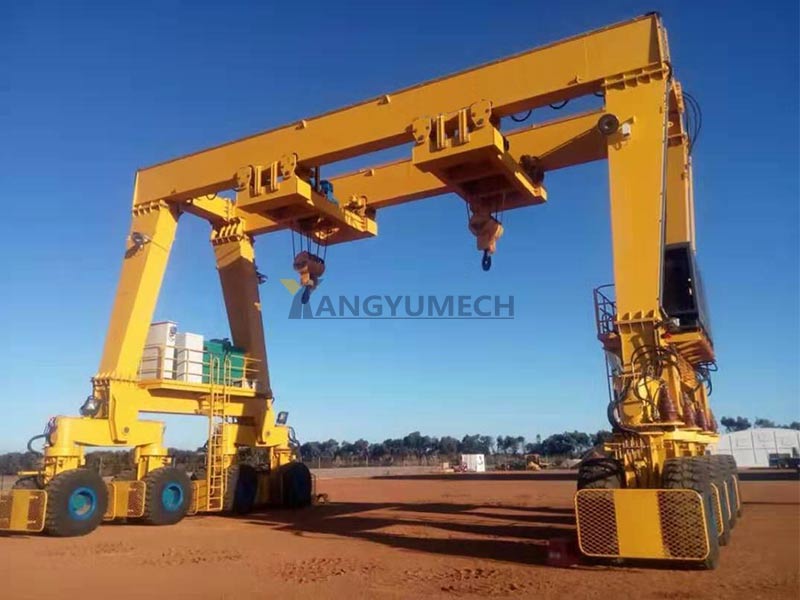
We define the Rubber-Tired Gantry (RTG) guindaste as a high-mobility container handling system engineered for stacking, transferring, and organizing intermodal containers within modern container terminals. Unlike rail-bound alternatives, RTG cranes operate on multi-axle rubber tire assemblies, enabling unrestricted navigation across container yards and delivering superior operational flexibility.
The structural framework integrates a rigid gantry structure, precision hoisting mechanisms, intelligent trolley systems, and advanced spreaders designed for standardized container handling. This configuration enables high stacking density, optimized yard utilization, and accelerated throughput rates under demanding logistics conditions.
RTG Crane Technical Specifications and Performance Parameters
We outline the critical technical specifications that define RTG crane performance and operational capability:
Core Engineering Parameters
Parâmetro – Typical Range
Capacidade de elevação: 30–65 tons
Span Length: 22–28 meters
Stacking Height: 1-over-3 to 1-over-6 containers
Velocidade de levantamento: 12–46 m/min
Travel Speed: 45–90 m/min
Operating Temperature: -20°C to +40°C
Structural and Mechanical Characteristics
– High-strength steel gantry frame with anti-torsion design
– Multi-wheel steering system for precise yard maneuverability
– Electrified or hybrid drive systems for reduced emissions
– Anti-sway control systems for precision container placement
– Automated positioning and terminal integration capability
These specifications allow RTG cranes to achieve consistent high-performance operation under continuous duty cycles.
Structural Design Advantages of RTG Cranes
1. Mobility Without Rail Constraints
We emphasize that RTG cranes eliminate the need for rail infrastructure, habilitando:
– Flexible yard layout modifications
– Reduced installation costs
– Dynamic reallocation of equipment
2. High-Density Container Stacking Capability
RTG cranes support stacking configurations up to:
– 6 containers high
– 8 containers wide
This maximizes land utilization and significantly increases storage capacity per square meter.
3. Advanced Stability and Load Control
We integrate:
– Anti-sway systems
– Load balancing mechanisms
– Precision control algorithms
These features ensure safe and accurate container placement even under high-speed operations.
Energy Efficiency and Environmental Performance
We implement modern RTG crane configurations with:
Electrification and Hybrid Systems
– Diesel-electric hybrid drives
– Full electric (E-RTG) conversion options
– Regenerative braking systems
Environmental Benefits
– Reduced fuel consumption
– Lower carbon emissions
– Compliance with global port sustainability standards
These innovations position RTG cranes as environmentally responsible solutions for modern logistics hubs.
Container Spreader Technical Specifications
We define container spreaders as critical load-handling devices integrated with RTG cranes.
Standard Spreader Parameters
Especificação: 20 ft Container; 40 ft Container
Capacidade de elevação: 32 toneladas; 40.5 toneladas
Rotation Speed: 0–1.5 r/min; 0–1.5 r/min
Power Supply: AC 380V; AC 380V
Advanced Telescopic Spreader Features
– Multi-size handling (20’, 40’, 45’)
– Hydraulic telescopic adjustment
– Rotation and alignment control
– High-pressure hydraulic systems (~10 MPa)
These systems ensure compatibility with global container standards and enhance operational flexibility.
Strategic Criteria for Selecting the Ideal RTG Crane
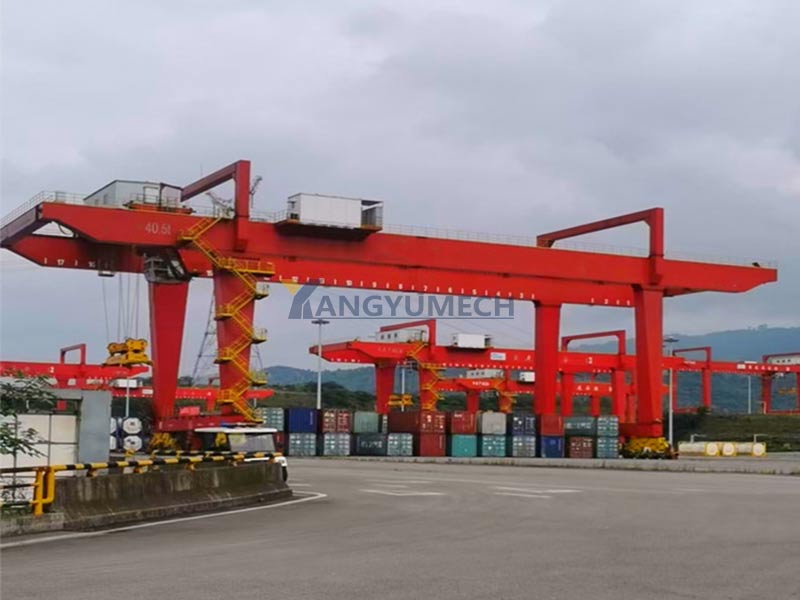
We recommend evaluating the following parameters when selecting an RTG crane:
Terminal Layout Optimization
– Yard width and stacking configuration
– Traffic flow design
– Equipment interaction zones
Throughput Requirements
– Container volume per hour/day
– Peak handling capacity
– Expansion scalability
Budget Allocation
– Initial capital expenditure
– Long-term operational costs
– Return on investment (ROI)
Sustainability Objectives
– Emission reduction targets
– Energy consumption limits
– Electrification readiness
A properly aligned selection strategy ensures maximum operational efficiency and long-term profitability.
Conclusão: RTG Cranes as the Backbone of Modern Container Yards
We establish that Rubber-Tired Gantry cranes deliver unmatched flexibility, high stacking efficiency, and scalable performance for container terminals. Their ability to operate without fixed infrastructure, combined with advanced automation and energy-efficient systems, positions them as the dominant solution for modern port logistics.
Through precise specification alignment, strategic investment, and technological integration, RTG cranes transform container yard operations into highly efficient, cost-optimized, and future-ready systems.
O RTGs (Rubber-Tired Gantry Cranes) manufactured at the Yangyumech plant are renowned for their exceptional environmental friendliness, intelligence, and high efficiency. Our RTG product line fully utilizes electric drive and hybrid power systems, significantly reducing energy consumption and emissions. Equipped with advanced automatic alignment, intelligent scheduling, and remote monitoring technologies, our systems ensure precise, seguro, and seamless yard operations. Through structural optimization and energy recovery designs, we enhance long-term reliability while substantially reducing our customers’ overall operating costs.
We look forward to collaborating with our customers to enhance logistics efficiency and create a sustainable, mutually beneficial future through tailored solutions and a comprehensive lifecycle service system.